Friday, May 22, 2009

The fake "evidence" regarding Dr. Mittag e-mail.

A few internet forums, namely topix.com and macedoniantruth.org, posted an e-mail, supposedly from the "Oxford Classicists Discussion Group" mailing list.

Such a group is nowhere to be found online.The supposed e-mail address of the group is "oxford.ssac.clarence.uk@ barebones.usenetnext.com".

In other words, the format is "mail@subdomain.domain.com".

The domain is "usenetnext.com" and it's non-existent, as a whois search shows.http://www.who.is/whois/usenetnext.com/

In this universe, there is absolutely no way that a mailing list will function with an imaginary domain.This is another shameless propaganda attempt, in order to discredit dozens of scholars supporting the historical truth about Macedonia and its greek character.

People spreading and supporting unsubstantiated accusations, based on falsified data, face the danger of being publicly humiliated

A mailing list can only function with a domain that exists.

Concluding, this e-mail is fake.

by PetrosM


UPDATE(23:20)

Vasko sent me the following information as regards the issue:

In this video, by FYROMian Sitel TV it is claimed that P. F. Mittag actually stated:

"I am surprised to find my name on the list....I have to distance myself from the list. I am not its signatory and it is a farce if Miller does not correct that. I don't like the tone of the letter. I think it is a political game without winner."

This is a screenshot of his statement:


This is the video-clip:

http://www.sitel.com.mk/?ItemID=1DC67A0D96DAEF45B7A28AC7E140FA0A

From the above is obvious that the FYROM is under falsification racing in order to discredit Mr Miller letter. Is not first time that Slavmacedonists produce propaganda in order to discredit scholars. No credible and objective historian in the world supports therts historical far fetched claims. Unfortunately for the nationalists from FYROM and her diaspora the ancestors of the Slavs of FYROM were almost universally regarded as Bulgarians up until the early 20th century .

Significant Hellenistic-era statue discovered in Alexandria of Egypt


ALEXANDRIA (ANA-MPA / N. Katsikas) --

The director of the Hellenic Research Institute of the Alexandrian Civilization (HRIAC) this week described a marble statue unearthed on May 4 during excavations in Shalalat Gardens of Alexandria, referring to a "a very important Hellenistic statue, very rare in terms of craftsmanship and beauty, and one that depicts a great figure of Hellenic history."

The 80cm-tall statue was found in very good condition and retains numerous characteristics reminiscent of statues depicting Alexander the Great.

HRIAC director Kalliopi Limneou-Papakosta, an archaeologist, underlined that the statue will have to be studied further in order to draw safer conclusions as regards the identity of the figure it depicts.

The specific statue is regarded as the most important discovery made in Alexandria in recent times, and will soon be on display at the city's archaeological museum.

Wednesday, May 20, 2009

Classical Scholars from around the world sent a Letter to US President Barack Obama as regards the Macedonian History and FYROM irredentism

On May 18th, 201 Classical Scholars from around the world, sent a letter to the President of the United States of America, Barak Obama.
Since then, the list of cosigners has grown to 216, see Addenda.
Here is the Documentation that accompanies the letter.

===============================================================

ancient-scholars@macedonia-evidence.org

May 18, 2009

The Honorable Barack Obama

President, United States of America

White House

1600 Pennsylvania Avenue, NW

Washington, DC 20500

Dear President Obama,

We, the undersigned scholars of Graeco-Roman antiquity, respectfully request that you intervene to clean up some of the historical debris left in southeast Europe by the previous U.S. administration.

On November 4, 2004, two days after the re-election of President George W. Bush, his administration unilaterally recognized the “Republic of Macedonia.” This action not only abrogated geographic and historic fact, but it also has unleashed a dangerous epidemic of historical revisionism, of which the most obvious symptom is the misappropriation by the government in Skopje of the most famous of Macedonians, Alexander the Great.

We believe that this silliness has gone too far, and that the U.S.A. has no business in supporting the subversion of history. Let us review facts. (The documentation for these facts [here in boldface] can be found attached and at: http://macedonia-evidence.org/documentation.html)

The land in question, with its modern capital at Skopje, was called Paionia in antiquity. Mts. Barnous and Orbelos (which form today the northern limits of Greece) provide a natural barrier that separated, and separates, Macedonia from its northern neighbor. The only real connection is along the Axios/Vardar River and even this valley “does not form a line of communication because it is divided by gorges.”

While it is true that the Paionians were subdued by Philip II, father of Alexander, in 358 B.C. they were not Macedonians and did not live in Macedonia. Likewise, for example, the Egyptians, who were subdued by Alexander, may have been ruled by Macedonians, including the famous Cleopatra, but they were never Macedonians themselves, and Egypt was never called Macedonia.

Rather, Macedonia and Macedonian Greeks have been located for at least 2,500 years just where the modern Greek province of Macedonia is. Exactly this same relationship is true for Attica and Athenian Greeks, Argos and Argive Greeks, Corinth and Corinthian Greeks, etc.

We do not understand how the modern inhabitants of ancient Paionia, who speak Slavic – a language introduced into the Balkans about a millennium after the death of Alexander – can claim him as their national hero. Alexander the Great was thoroughly and indisputably Greek. His great-great-great grandfather, Alexander I, competed in the Olympic Games where participation was limited to Greeks.

Even before Alexander I, the Macedonians traced their ancestry to Argos, and many of their kings used the head of Herakles - the quintessential Greek hero - on their coins.

Euripides – who died and was buried in Macedonia– wrote his play Archelaos in honor of the great-uncle of Alexander, and in Greek. While in Macedonia, Euripides also wrote the Bacchai, again in Greek. Presumably the Macedonian audience could understand what he wrote and what they heard.

Alexander’s father, Philip, won several equestrian victories at Olympia and Delphi, the two most Hellenic of all the sanctuaries in ancient Greece where non-Greeks were not allowed to compete. Even more significantly, Philip was appointed to conduct the Pythian Games at Delphi in 346 B.C. In other words, Alexander the Great’s father and his ancestors were thoroughly Greek. Greek was the language used by Demosthenes and his delegation from Athens when they paid visits to Philip, also in 346 B.C. Another northern Greek, Aristotle, went off to study for nearly 20 years in the Academy of Plato. Aristotle subsequently returned to Macedonia and became the tutor of Alexander III. They used Greek in their classroom which can still be seen near Naoussa in Macedonia.

Alexander carried with him throughout his conquests Aristotle’s edition of Homer’s Iliad. Alexander also spread Greek language and culture throughout his empire, founding cities and establishing centers of learning. Hence inscriptions concerning such typical Greek institutions as the gymnasium are found as far away as Afghanistan. They are all written in Greek.

The questions follow: Why was Greek the lingua franca all over Alexander’s empire if he was a “Macedonian”? Why was the New Testament, for example, written in Greek?

The answers are clear: Alexander the Great was Greek, not Slavic, and Slavs and their language were nowhere near Alexander or his homeland until 1000 years later. This brings us back to the geographic area known in antiquity as Paionia. Why would the people who live there now call themselves Macedonians and their land Macedonia? Why would they abduct a completely Greek figure and make him their national hero?

The ancient Paionians may or may not have been Greek, but they certainly became Greekish, and they were never Slavs. They were also not Macedonians. Ancient Paionia was a part of the Macedonian Empire. So were Ionia and Syria and Palestine and Egypt and Mesopotamia and Babylonia and Bactria and many more. They may thus have become “Macedonian” temporarily, but none was ever “Macedonia”. The theft of Philip and Alexander by a land that was never Macedonia cannot be justified.

The traditions of ancient Paionia could be adopted by the current residents of that geographical area with considerable justification. But the extension of the geographic term “Macedonia” to cover southern Yugoslavia cannot. Even in the late 19th century, this misuse implied unhealthy territorial aspirations.

The same motivation is to be seen in school maps that show the pseudo-greater Macedonia, stretching from Skopje to Mt. Olympus and labeled in Slavic. The same map and its claims are in calendars, bumper stickers, bank notes, etc., that have been circulating in the new state ever since it declared its independence from Yugoslavia in 1991. Why would a poor land-locked new state attempt such historical nonsense? Why would it brazenly mock and provoke its neighbor?

However one might like to characterize such behavior, it is clearly not a force for historical accuracy, nor for stability in the Balkans. It is sad that the United States of America has abetted and encouraged such behavior.

We call upon you, Mr. President, to help - in whatever ways you deem appropriate - the government in Skopje to understand that it cannot build a national identity at the expense of historic truth. Our common international society cannot survive when history is ignored, much less when history is fabricated.

Sincerely,

NAME TITLE INSTITUTION

Harry C. Avery, Professor of Classics, University of Pittsburgh (USA)

Dr. Dirk Backendorf. Akademie der Wissenschaften und der Literatur Mainz (Germany)

Elizabeth C. Banks, Associate Professor of Classics (ret.), University of Kansas (USA)

Luigi Beschi, professore emerito di Archeologia Classica, Università di Firenze (Italy)

Josine H. Blok, professor of Ancient History and Classical Civilization, Utrecht University (The Netherlands)

Alan Boegehold, Emeritus Professor of Classics, Brown University (USA)

Efrosyni Boutsikas, Lecturer of Classical Archaeology, University of Kent (UK)

Keith Bradley, Eli J. and Helen Shaheen Professor of Classics, Concurrent Professor of History, University of Notre Dame (USA)

Stanley M. Burstein, Professor Emeritus, California State University, Los Angeles (USA)

Francis Cairns, Professor of Classical Languages, The Florida State University (USA)

John McK. Camp II, Agora Excavations and Professor of Archaeology, ASCSA, Athens (Greece)

Paul Cartledge, A.G. Leventis Professor of Greek Culture, University of Cambridge (UK)

Paavo Castrén, Professor of Classical Philology Emeritus, University of Helsinki (Finland)

William Cavanagh, Professor of Aegean Prehistory, University of Nottingham (UK)

Angelos Chaniotis, Professor, Senior Research Fellow, All Souls College, Oxford (UK)

Paul Christesen, Professor of Ancient Greek History, Dartmouth College (USA)

Ada Cohen, Associate Professor of Art History, Dartmouth College (USA)

Randall M. Colaizzi, Lecturer in Classical Studies, University of Massachusetts-Boston (USA)

Kathleen M. Coleman, Professor of Latin, Harvard University (USA)

Michael B. Cosmopoulos, Ph.D., Professor and Endowed Chair in Greek Archaeology, University of Missouri-St. Louis (USA)

Kevin F. Daly, Assistant Professor of Classics, Bucknell University (USA)

Wolfgang Decker, Professor emeritus of sport history, Deutsche Sporthochschule, Köln (Germany)

Luc Deitz, Ausserplanmässiger Professor of Mediaeval and Renaissance Latin, University of Trier (Germany), and Curator of manuscripts and rare books, National Library of Luxembourg (Luxembourg)

Michael Dewar, Professor of Classics, University of Toronto (Canada)

John D. Dillery, Associate Professor of Classics, University of Virginia (USA)

Sheila Dillon, Associate Professor, Depts. of Art, Art History & Visual Studies and Classical Studies, Duke University (USA)

Douglas Domingo-Forasté, Professor of Classics, California State University, Long Beach (USA)

Pierre Ducrey, professeur honoraire, Université de Lausanne (Switzerland)

Roger Dunkle, Professor of Classics Emeritus, Brooklyn College, City University of New York (USA)

Michael M. Eisman, Associate Professor Ancient History and Classical Archaeology, Department of History, Temple University (USA)

Mostafa El-Abbadi, Professor Emeritus, University of Alexandria (Egypt)

R. Malcolm Errington, Professor für Alte Geschichte (Emeritus) Philipps-Universität, Marburg (Germany)

Panagiotis Faklaris, Assistant Professor of Classical Archaeology, Aristotle University of Thessaloniki (Greece)

Denis Feeney, Giger Professor of Latin, Princeton University (USA)

Elizabeth A. Fisher, Professor of Classics and Art History, Randolph-Macon College (USA)

Nick Fisher, Professor of Ancient History, Cardiff University (UK)

R. Leon Fitts, Asbury J Clarke Professor of Classical Studies, Emeritus, FSA, Scot., Dickinson Colllege (USA)

John M. Fossey FRSC, FSA, Emeritus Professor of Art History (and Archaeology), McGill Univertsity, Montreal, and Curator of Archaeology, Montreal Museum of Fine Arts (Canada)

Robin Lane Fox, University Reader in Ancient History, New College, Oxford (UK)

Rainer Friedrich, Professor of Classics Emeritus, Dalhousie University, Halifax, N.S. (Canada)

Heide Froning, Professor of Classical Archaeology, University of Marburg (Germany)

Peter Funke, Professor of Ancient History, University of Muenster (Germany)

Traianos Gagos, Professor of Greek and Papyrology, University of Michigan (USA)

Robert Garland, Roy D. and Margaret B. Wooster Professor of the Classics, Colgate University, Hamilton NY (USA)

Douglas E. Gerber, Professor Emeritus of Classical Studies, University of Western Ontario (Canada)

Hans R. Goette, Professor of Classical Archaeology, University of Giessen (Germany); German Archaeological Institute, Berlin (Germany)

Sander M. Goldberg, Professor of Classics, UCLA (USA)

Erich S. Gruen, Gladys Rehard Wood Professor of History and Classics, Emeritus, University of California, Berkeley (USA)

Christian Habicht, Professor of Ancient History, Emeritus, Institute for Advanced Study, Princeton (USA)

Donald C. Haggis, Nicholas A. Cassas Term Professor of Greek Studies, University of North Carolina at Chapel Hill (USA)

Judith P. Hallett, Professor of Classics, University of Maryland, College Park, MD (USA)

Prof. Paul B. Harvey, Jr. Head, Department of Classics and Ancient Mediterranean Studies, The Pennsylvania State University (USA)

Eleni Hasaki, Associate Professor of Classical Archaeology, University of Arizona (USA)

Miltiades B. Hatzopoulos, Director, Research Centre for Greek and Roman Antiquity, National Research Foundation, Athens (Greece)

Wolf-Dieter Heilmeyer, Prof. Dr., Freie Universität Berlin und Antikensammlung der Staatlichen Museen zu Berlin (Germany)

Steven W. Hirsch, Associate Professor of Classics and History, Tufts University (USA)

Karl-J. Hölkeskamp, Professor of Ancient History, University of Cologne (Germany)

Frank L. Holt, Professor of Ancient History, University of Houston (USA)

Dan Hooley, Professor of Classics, University of Missouri (USA)

Meredith C. Hoppin, Gagliardi Professor of Classical Languages, Williams College, Williamstown, MA (USA)

Caroline M. Houser, Professor of Art History Emerita, Smith College (USA) and Affiliated Professor, University of Washington (USA)

Georgia Kafka, Visiting Professor of Modern Greek Language, Literature and History, University of New Brunswick (Canada)

Anthony Kaldellis, Professor of Greek and Latin, The Ohio State University (USA)

Andromache Karanika, Assistant Professor of Classics, University of California, Irvine (USA)

Robert A. Kaster, Professor of Classics and Kennedy Foundation Professor of Latin, Princeton University (USA)

Vassiliki Kekela, Adjunct Professor of Greek Studies, Classics Department, Hunter College, City University of New York (USA)

Dietmar Kienast, Professor Emeritus of Ancient History, University of Duesseldorf (Germany)

Karl Kilinski II, University Distinguished Teaching Professor, Southern Methodist University (USA)

Dr. Florian Knauss, associate director, Staatliche Antikensammlungen und Glyptothek Muenchen (Germany)

Denis Knoepfler, Professor of Greek Epigraphy and History, Collège de France (Paris)

Ortwin Knorr, Associate Professor of Classics, Willamette University (USA)

Robert B. Koehl, Professor of Archaeology, Department of Classical and Oriental Studies Hunter College, City University of New York (USA)

Georgia Kokkorou-Alevras, Professor of Classical Archaeology, University of Athens (Greece)

Ann Olga Koloski-Ostrow, Associate Professor and Chair, Department of Classical Studies, Brandeis University (USA)

Eric J. Kondratieff, Assistant Professor of Classics and Ancient History, Department of Greek & Roman Classics, Temple University

Haritini Kotsidu, Apl. Prof. Dr. für Klassische Archäologie, Goethe-Universität, Frankfurt/M. (Germany)

Lambrini Koutoussaki, Dr., Lecturer of Classical Archaeology, University of Zürich (Switzerland)

David Kovacs, Hugh H. Obear Professor of Classics, University of Virginia (USA)

Peter Krentz, W. R. Grey Professor of Classics and History, Davidson College (USA)

Friedrich Krinzinger, Professor of Classical Archaeology Emeritus, University of Vienna (Austria)

Michael Kumpf, Professor of Classics, Valparaiso University (USA)

Donald G. Kyle, Professor of History, University of Texas at Arlington (USA)

Prof. Dr. Dr. h.c. Helmut Kyrieleis, former president of the German Archaeological Institute, Berlin (Germany)

Gerald V. Lalonde, Benedict Professor of Classics, Grinnell College (USA)

Steven Lattimore, Professor Emeritus of Classics, University of California, Los Angeles (USA)

Francis M. Lazarus, President, University of Dallas (USA)

Mary R. Lefkowitz, Andrew W. Mellon Professor in the Humanities, Emerita, Wellesley College (USA)

Iphigeneia Leventi, Assistant Professor of Classical Archaeology, University of Thessaly (Greece)

Daniel B. Levine, Professor of Classical Studies, University of Arkansas (USA)

Christina Leypold, Dr. phil., Archaeological Institute, University of Zurich (Switzerland)

Vayos Liapis, Associate Professor of Greek, Centre d’Études Classiques & Département de Philosophie, Université de Montréal (Canada)

Hugh Lloyd-Jones, Professor of Greek Emeritus, University of Oxford (UK)

Yannis Lolos, Assistant Professor, History, Archaeology, and Anthropology, University of Thessaly (Greece)

Stanley Lombardo, Professor of Classics, University of Kansas, USA

Anthony Long, Professor of Classics and Irving G. Stone Professor of Literature, University of California, Berkeley (USA)

Julia Lougovaya, Assistant Professor, Department of Classics, Columbia University (USA)

A.D. Macro, Hobart Professor of Classical Languages emeritus, Trinity College (USA)

John Magee, Professor, Department of Classics, Director, Centre for Medieval Studies, University of Toronto (Canada)

Dr. Christofilis Maggidis, Associate Professor of Archaeology, Dickinson College (USA)

Jeannette Marchand, Assistant Professor of Classics, Wright State University, Dayton, Ohio (USA)

Richard P. Martin, Antony and Isabelle Raubitschek Professor in Classics, Stanford University

Maria Mavroudi, Professor of Byzantine History, University of California, Berkeley (USA)

Alexander Mazarakis Ainian, Professor of Classical Archaeology, University of Thessaly (Greece)

James R. McCredie, Sherman Fairchild Professor emeritus; Director, Excavations in Samothrace Institute of Fine Arts, New York University (USA)

James C. McKeown, Professor of Classics, University of Wisconsin-Madison (USA)

Robert A. Mechikoff, Professor and Life Member of the International Society of Olympic Historians, San Diego State University (USA)

Andreas Mehl, Professor of Ancient History, Universitaet Halle-Wittenberg (Germany)

Harald Mielsch, Professor of Classical Archeology, University of Bonn (Germany)

Stephen G. Miller, Professor of Classical Archaeology Emeritus, University of California, Berkeley (USA)

Phillip Mitsis, A.S. Onassis Professor of Classics and Philosophy, New York University (USA)

Peter Franz Mittag, Professor für Alte Geschichte, Universität zu Köln (Germany)

David Gordon Mitten, James Loeb Professor of Classical Art and Archaeology, Harvard University (USA)

Margaret S. Mook, Associate Professor of Classical Studies, Iowa State University (USA)

Anatole Mori, Associate Professor of Classical Studies, University of Missouri- Columbia (USA)

Jennifer Sheridan Moss, Associate Professor, Wayne State University (USA)

Ioannis Mylonopoulos, Assistant Professor of Greek Art History and Archaeology, Columbia University, New York (USA).

Richard Neudecker, PD of Classical Archaeology, Deutsches Archäologisches Institut Rom (Italy)

James M.L. Newhard, Associate Professor of Classics, College of Charleston (USA)

Carole E. Newlands, Professor of Classics, University of Wisconsin, Madison (USA)

John Maxwell O'Brien, Professor of History, Queens College, City University of New York (USA)

James J. O'Hara, Paddison Professor of Latin, The University of North Carolina, Chapel Hill (USA)

Martin Ostwald, Professor of Classics (ret.), Swarthmore College and Professor of Classical Studies (ret.), University of Pennsylvania (USA)

Olga Palagia, Professor of Classical Archaeology, University of Athens (Greece)

Vassiliki Panoussi, Associate Professor of Classical Studies, The College of William and Mary (USA)

Maria C. Pantelia, Professor of Classics, University of California, Irvine (USA)

Pantos A.Pantos, Adjunct Faculty, Department of History, Archaeology and Social Anthropology, University of Thessaly (Greece)

Anthony J. Papalas, Professor of Ancient History, East Carolina University (USA)

Nassos Papalexandrou, Associate Professor, The University of Texas at Austin (USA)

Polyvia Parara, Visiting Assistant Professor of Greek Language and Civilization, Department of Classics, Georgetown University (USA)

Richard W. Parker, Associate Professor of Classics, Brock University (Canada)

Robert Parker, Wykeham Professor of Ancient History, New College, Oxford (UK)

Anastasia-Erasmia Peponi, Associate Professor of Classics, Stanford University (USA)

Jacques Perreault, Professor of Greek archaeology, Université de Montréal, Québec (Canada)

Yanis Pikoulas, Associate Professor of Ancient Greek History, University of Thessaly (Greece)

John Pollini, Professor of Classical Art & Archaeology, University of Southern California (USA)

David Potter, Arthur F. Thurnau Professor of Greek and Latin. The University of Michigan (USA)

Robert L. Pounder, Professor Emeritus of Classics, Vassar College (USA)

Nikolaos Poulopoulos, Assistant Professor in History and Chair in Modern Greek Studies, McGill University (Canada)

William H. Race, George L. Paddison Professor of Classics, University of North Carolina at Chapel Hill (USA)

John T. Ramsey, Professor of Classics, University of Illinois at Chicago (USA)

Karl Reber, Professor of Classical Archaeology, University of Lausanne (Switzerland)

Rush Rehm, Professor of Classics and Drama, Stanford University (USA)

Werner Riess, Associate Professor of Classics, The University of North Carolina at Chapel Hill (USA)

Robert H. Rivkin, Ancient Studies Department, University of Maryland Baltimore County (USA)

Barbara Saylor Rodgers, Professor of Classics, The University of Vermont (USA)

Robert H. Rodgers. Lyman-Roberts Professor of Classical Languages and Literature, University of Vermont (USA)

Nathan Rosenstein, Professor of Ancient History, The Ohio State University (USA)

John C. Rouman, Professor Emeritus of Classics, University of New Hampshire, (USA)

Dr. James Roy, Reader in Greek History (retired), University of Nottingham (UK)

Steven H. Rutledge, Associate Professor of Classics, Department of Classics, University of Maryland, College Park (USA)

Christina A. Salowey, Associate Professor of Classics, Hollins University (USA)

Guy D. R. Sanders, Resident Director of Corinth Excavations, The American School of Classical Studies at Athens (Greece)

Theodore Scaltsas, Professor of Ancient Greek Philosophy, University of Edinburgh (UK)

Thomas F. Scanlon, Professor of Classics, University of California, Riverside (USA)

Bernhard Schmaltz, Prof. Dr. Archäologisches Institut der CAU, Kiel (Germany)

Rolf M. Schneider, Professor of Classical Archaeology, Ludwig-Maximilians- Universität München (Germany)

Peter Scholz, Professor of Ancient History and Culture, University of Stuttgart (Germany)

Christof Schuler, director, Commission for Ancient History and Epigraphy of the German Archaeological Institute, Munich (Germany)

Paul D. Scotton, Assoociate Professor Classical Archaeology and Classics, California State University Long Beach (USA)

Danuta Shanzer, Professor of Classics and Medieval Studies, The University of Illinois at Urbana-Champaign and Fellow of the Medieval Academy of America (USA)

James P. Sickinger, Associate Professor of Classics, Florida State University (USA)

Marilyn B. Skinner 
Professor of Classics, 
University of Arizona (USA)

Niall W. Slater, Samuel Candler Dobbs Professor of Latin and Greek, Emory University (USA)

Peter M. Smith, Associate Professor of Classics, University of North Carolina at Chapel Hill (USA)

Dr. Philip J. Smith, Research Associate in Classical Studies, McGill University (Canada)

Susan Kirkpatrick Smith Assistant Professor of Anthropology Kennesaw State University (USA)

Antony Snodgrass, Professor Emeritus of Classical Archaeology, University of Cambridge (UK)

Theodosia Stefanidou-Tiveriou, Professor of Classical Archaeology, Aristotle University of Thessaloniki (Greece).

Andrew Stewart, Nicholas C. Petris Professor of Greek Studies, University of California, Berkeley (USA)

Oliver Stoll, Univ.-Prof. Dr., Alte Geschichte/ Ancient History,Universität Passau (Germany)

Richard Stoneman, Honorary Fellow, University of Exeter (England)

Ronald Stroud, Klio Distinguished Professor of Classical Languages and Literature Emeritus, University of California, Berkeley (USA)

Sarah Culpepper Stroup, Associate Professor of Classics, University of Washington (USA)

Nancy Sultan, Professor and Director, Greek & Roman Studies, Illinois Wesleyan University (USA)

David W. Tandy, Professor of Classics, University of Tennessee (USA)

James Tatum, Aaron Lawrence Professor of Classics, Dartmouth College

Martha C. Taylor, Associate Professor of Classics, Loyola College in Maryland

Petros Themelis, Professor Emeritus of Classical Archaeology, Athens (Greece)

Eberhard Thomas, Priv.-Doz. Dr.,Archäologisches Institut der Universität zu Köln (Germany)

Michalis Tiverios, Professor of Classical Archaeology, Aristotle University of Thessaloniki (Greece)

Michael K. Toumazou, Professor of Classics, Davidson College (USA)

Stephen V. Tracy, Professor of Greek and Latin Emeritus, Ohio State University (USA)

Prof. Dr. Erich Trapp, Austrian Academy of Sciences/Vienna resp. University of Bonn (Germany)

Stephen M. Trzaskoma, Associate Professor of Classics, University of New Hampshire (USA)

Vasiliki Tsamakda, Professor of Christian Archaeology and Byzantine History of Art, University of Mainz (Germany)

Christopher Tuplin, Professor of Ancient History, University of Liverpool (UK)

Gretchen Umholtz, Lecturer, Classics and Art History, University of Massachusetts, Boston (USA)

Panos Valavanis, Professor of Classical Archaeology, University of Athens (Greece)

Athanassios Vergados, Visiting Assistant Professor of Classics, Franklin & Marshall College, Lancaster, PA

Christina Vester, Assistant Professor of Classics, University of Waterloo (Canada)

Emmanuel Voutiras, Professor of Classical Archaeology, Aristotle University of Thessaloniki (Greece)

Speros Vryonis, Jr., Alexander S. Onassis Professor (Emeritus) of Hellenic Civilization and Culture, New York University (USA)

Michael B. Walbank, Professor Emeritus of Greek, Latin & Ancient History, The University of Calgary (Canada)

Bonna D. Wescoat, Associate Professor, Art History and Ancient Mediterranean Studies, Emory University (USA)

E. Hector Williams, Professor of Classical Archaeology, University of British Columbia (Canada)

Roger J. A. Wilson, Professor of the Archaeology of the Roman Empire, and Director, Centre for the Study of Ancient Sicily, University of British Columbia, Vancouver (Canada)

Engelbert Winter, Professor for Ancient History, University of Münster (Germany)

Timothy F. Winters, Ph.D. Alumni Assn. Distinguished Professor of Classics, Austin Peay State University (USA)

Ian Worthington, Frederick A. Middlebush Professor of History, University of Missouri-Columbia (USA)

Michael Zahrnt, Professor für Alte Geschichte, Universität zu Köln (Germany)

Paul Zanker, Professor Emeritus of Classical Studies, University of Munich (Germany)

201 signatures as of May 18th 2009.

For the growing list of scholars, please go to the Addenda.


cc: J. Biden, Vice President, USA

H. Clinton, Secretary of State USA

P. Gordon, Asst. Secretary-designate, European and Eurasian Affairs

H.L Berman, Chair, House Committee on Foreign Affairs

I. Ros-Lehtinen, Ranking Member, House Committee on Foreign Affairs

J. Kerry, Chair, Senate Committee on Foreign Relations

R.G. Lugar, Ranking Member, Senate Committee on Foreign Relations

R. Mendenez, United States Senator from New Jersey.


Addenda

12 Scholars added on May 19th 2009:

Mariana Anagnostopoulos, Assistant Professor of Philosophy, California State University, Fresno (USA)

John P. Anton, Distinguished Professor of Greek Philosophy and Culture University of South Florida (USA)

Effie F. Athanassopoulos, Associate Professor 
Anthropology and Classics, University of Nebraska-Lincoln (USA)

Leonidas Bargeliotes, Emeritus Professor of Philosophy, University of Athens, President of the Olympic Center for Philosophy and Culture (Greece)

Joseph W. Day, Professor of Classics, Wabash College (USA)

Christos C. Evangeliou, Professor of Ancient Hellenic Philosophy, Towson University, Maryland, Honorary President of International Association for Greek Philosophy (USA)

Eleni Kalokairinou, Assistant Professor of Philosophy, Secretary of the Olympic Center of Philosophy and Culture (Cyprus)

Lilian Karali, Professor of Prehistoric and Environmental Archaeology, University of Athens (Greece)

Anna Marmodoro, Faculty of Philosophy, University of Oxford (UK)

Marion Meyer, Professor of Classical Archaeology, University of Vienna(Austria)

Jessica L. Nitschke, Assistant Professor of Classics, Georgetown University (USA)

David C.Young, Professor of Classics Emeritus, University of Florida (USA)

3 Scholars added on May 20th 2009:

Maria Ypsilanti, Assistant Professor of Ancient Greek Literature, University of Cyprus

Christos Panayides, Associate Professor of Philosophy, University of Nicosia, (Cyprus)

Anagnostis P. Agelarakis, Professor of Anthropology, Adelphi University (USA)

Tuesday, May 05, 2009

Ethnic Circumstances in the Area of Povardarje (FYROM) Evidenced by the Medieval Serbs [1282-1392]

Serbs ruled the area of Povardarje (FYROM) and later Macedonia, without Thessaloniki, from late 13th and most of the 14th century. In this video it is explained that there are no Serbian sources from that era mentioning "Macedonians" of present-day Pseudomacedonian type.


by Vasko

Sunday, April 26, 2009

The Church of St. Georgios in the village of Staro Nagorichane near Kumanovo-FYROM


The Church of St. Georgios in the village of Staro Nagorichane is one of the most important 14th century Byzantine monuments, the architectural conception and fresco decoration of which tally with the latest cultural achievements of Byzantine art in Thessalonica and Constantinople. St. George church was built upon the foundations of an older building dating back to the reign of the Byzantine Emperor Roman IV Diogenes (11th century), ruined later. The church was renovated in 1313 by the Serbian king Milutin. The frescoes are one of the last works of the famous royal painters Michael and Eutychius from Thessalonica. Michael Astrapas and Eutychios (flourished 1294 to 1317) were Greek painters from Thessaloniki.

Some of their works included frescos at FYROMian churches:
Church of Saint Clement at Ohrid (1294-1295)
Church of Saint Niketas at Cucer (before 1316)
Church of Saint George at Staro Nagoricvino (1317)

by Makedonas82

Monday, April 13, 2009

Pseudomacedonism Crosses Paths With the Supernatural: Talking to Alexander the Great

Aleksander Donski, FYROM's most popular pseudohistorian contacts the American "medium" Steve Hermann at a spiritualist session in which the later claims a contact with Alexander the Great.


by Vasko
Словенска Филхеленска Мрежа - Σλαβικό Φιλελληνικό Δίκτυο - Slavic Philhellenic Network

Sunday, April 05, 2009

Archaeological Museum in Skopje(FYROM)


Muzej na ''Makedonija'' Arheoloski, Etnoloski, Istoriski (Museum of F.Y.R.O.M Archaeological, Ethnological and Historical Department) Date founded: 1949 Photos by Miltos B.

by Makedonas82

Saturday, April 04, 2009

Philip II's palace revealed

The restoration works on the palace of Aigai at the archaeological site of Vergina of northern Greece have provided archaeologists with additional information on the impressive construction, described as in league with the Parthenon atop the Acropolis in central Athens and three times as large.

The recently completed three-million-euro initial restoration phase was funded by the 3rd Community Support Framework (CSF) and according to findings presented at the 22nd scientific meeting on archaeological excavations and work the Macedonia and Thrace provinces, restoration works have helped to document many facts on the building's ground plan. Construction work on the palace of King Philip II of Macedon began in 350 BC and was completed in 336 BC providing important information on ancient Macedonian architecture, because it was completed without interruptions and posterior interventions or alterations.

The restoration of the two-storey gallery (stoa) in the building's front section was a "revelation" for archaeologists' studying ancient architecture, as it contradicted earlier beliefs according to which such galleries were a later practice, dating in the 2nd century BC. The galleries' architectural sections are built based on the "golden mean" ratio (1 to 1.6). Archaeologists believe that Pytheos was the palace's architect, who had also designed the mausoleum of Halicarnassus, while the mausoleum's sculptor Leocharis had also worked on the palace of Aigai.

http://www.ana-mpa.gr/anaweb/user/showplain?maindoc=7472140&maindocimg=7471646&service=102

Thursday, April 02, 2009

What the ancient sources recorded as regards Alexander death


1. Diodorus Siculus (17.117, 1–3)

‘‘He drank much unmixed wine.and finally downed a whole beaker in one gulp. Instantly, he shrieked aloud as if smitten by a violent blow.and was led by the hand back to his apartments.’’


2. Curtius Rufus


There is a large lacuna at 10.4 and, when 10.5 begins, the king is already mortally ill, and ‘died moments later’.


3. Plutarch(Alexander, 75–6)

‘‘He allowed himself to indulge in a number of .drinking bouts. He gave a splendid banquet in honour of Nearchus. (and) when Medius invited him he went to his house, and there, after drinking through all the next day, he began to feel feverish.’’
Plutarch expressly denies a ‘big drink’, or the onset of a sudden pain.

‘‘These are details with which certain historians felt obliged to embellish the occasion...and invent a tragic end and moving finale to a great action. Aristobulus tells us that he was seized with a raging fever.became very thirsty and drank wine which made him delirious.’
He then goes on to describe continued high fever, gradual deterioration and death about 10 days after Medius’ party. Plutarch avers that ‘most of this account follows the version which is given in ‘‘the journals’’ almost word for word’.

4. Arrian (7, 24–26)
Arrian tells essentially the same story as Plutarch. Alexander had been drinking ‘far into the night’ and accepted Medius’ invitation to another ‘merry party’ where he again set to drinking, continuing till late at night after which ‘(he) went straight to sleep with the fever already on him’. There is no record in Arrian’s text of a catastrophic event, but he describes the same slow deterioration with a high fever and death about 10 days later. ‘These details are all to be found in the Diaries’.

5. Justin (12, 13–14)
Justin tells the same story of prolonged drinking followed by Medius’ invitation to continue. But, he adds,

‘Alexander took a cup, but had not drunk more that half of it when he suddenly uttered a groan as if he had been pierced by a spear.and was racked by such agony that he asked for a sword to put an end to it, and the pain on being touched was like that of a wound’.
There is the same description of a slow deterioration, but no mention of a fever.

‘‘On the sixth day, Alexander’s voice failed. His friends put it about that the cause of his illness was excessive drinking, but it was in fact a conspiracy though the scandal was suppressed by the power of his successors.’’

There are clearly discrepancies in these accounts. Both Plutarch and Arrian expressly quote from the ‘Royal Diaries’. The authenticity and authorship of such diaries has been questioned by modern scholars and, of course, if there were any, they have been lost. Views, pro and con, have been expressed by Pearson( The diary and letters of Alexander the Great. Historia 1954–5; 3: 429–55.), Hammond ( Collected Studies III Alexander and his Successors in Macedonia. Amsterdam: Hakkert, 1994, pp. 151–172) and Lane Fox( Alexander the Great. London: Robert Hale, 1968,p. 468). Bosworth ( Conquest and Empire. Cambridge: Cambridge University Press, 1988,p. 299) points out that the diaries may have been edited to remove evidence of a catastrophic event during drinking to suppress suspicions of poisoning.

The plain fact in all of this is that the noble Macedonians drank in legendary quantities and drunken quarrels and murder occurred not infrequently (Plutarch, 9, 23; Curtius Rufus, 8,1–43; Arrian, 4, 14; ). What appears clear from the ancient accounts is that Alexander indulged in prodigious and long continued drinking. There may have been a catastrophic event. He developed a high fever, slowly deteriorated and died about 10 days later.

Monday, March 30, 2009

Ancient Pella workshop discovered


A recently excavated ceramics workshop has yielded a plethora of information concerning the economic activities of Hellenistic-era Pella, one of the most significant sites in the ancient kingdom of Macedon, according to archaeologists in Thessaloniki on Monday, who spoke during a presentation of artifacts and findings.

The workshop, unearthed by archaeologists of the culture ministry's 17th directorate of prehistoric and classical studies, was discovered north of the new entrance of the Pella archaeological site. It is believed to have been in operation between the final quarter of the 4th century BC and 200 BC.

A plumbing system used to clean the potter's clay is among the most notable findings, while a furnace and storage areas were also uncovered. Movable artifacts include pottery casts, vessels, fragments of statuettes and silver and bronze coins.

Caption:
An aerial view of an ancient ceramics workshop recently excavated at the Pella archaeological site in northern Greece, one of the most significant sites in the ancient kingdom of Macedon, the homeland of Philip II and Alexander the Great, was presented in Thessaloniki on Monday, March 30, 2009 by culture ministry archaeologists. ANA-MPA / STR.

source:ANA-MPA

Tuesday, March 24, 2009

Afghanistan requires back the Greek heritage that was destroyed from the USAID

“We have the biggest Greek theatre in the world after Epidaurus”, the Afghan professor Harzi courageously declares. It was destroyed as well with all our monuments Moutzaheadin and Taliban. Now we request the assistance of civilized countries in order to gather the remains.’’

The truth is hidden in these phrases for the unrooting of Greek past that the Afghans consider their national heritage. USAID used a large sum of money in order to transmute the cultural background of Afghans, eradicate the “Soviet education” and make a nest of Moutzaheadin in Islamic schools in the borders with Pakistan where the Afghans were arriving in order to acquire bread and hate. Inhuman moulads undertook the propaganda of Islamic sariah law and Soviet books became holy books for children (only for the boys of course), children that learn not to count with cute little sheeps, but with bombs that with ‘’eradicate’’ the ‘’infidels’’. The same USAID that now finances the educational books of Cyprus in order to ‘’reconciles’’ the two communities!!

And the rage of Afghan scientists overflows when they explain that the Americans sent metal detectors with the pretext of demining, but in the substance were useful in order to are located the Ancient Greek Macedonian Graves and the precious relics they were hiding! The American intermediaries waited for the merchandise in order to sell them in museums and private collections. Extensive use of explosives destroyed many temples and monuments in order to make the illegal excavations easier. Pillagers encouraged the moulads to ‘’get rid of anything that was ‘’pagan’’. Anything that could not be transported was simply turned in ruins from hate and greed. The Greek treasures were stolen by the museum of Kabul despite the desparate calls of workers that saw their culture lost in the dark. The fact that they felt proud for their Greek Macedonian origin of Alexander was obvious in the all of their newer history, a fact that even the Soviets respected in the education system they had established in the past. And the Afghan land always gave its treasures generously and willingly since their craftsmen maintained the knowledge alive even after the arrival of Buddhism.


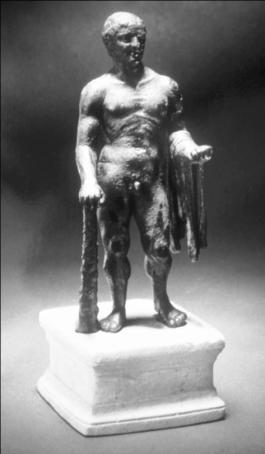
Bronge Statue of Heracles.

A characteristic example is the many statues of Hercules since the splendid gym of Ai Khanoum was dedicated in the Greek hero’s divine form. Such a wonderful masterpiece was sold in a bazaar of Pakistan in 2002.


Macedonian finding in Aphaganian currency.


Thousands of old coins were sold and auctioned in sacks (!) and the massive amount of discoveries that really proves the multiannual presence of Kings of the Baktrian and their popularity causes feelings of awe. Temples, gyms, states all buried in the semidarkness of tradition before the irreparably covering from the dark of domination and religious fanaticism.


Macedonian coins weight 50 kilos.


Now, Afghan scientists try to recover the lost cultural wealth. Unfortunately they were forced to ask the help of Unesco and the “civilized” West. The West that from the center of the “Afghan studies” in the university of Nebraska, supplied CIA and other secret services with information concerning the moves of the Soviets, the interactions of various sects and the attribution of nominations Talibans. In this ‘’at euphemism’’ university the times that “terrorists” were called in the university in order to met with American dignitaries were very not few at all. With the ‘’assistance’’ of USAID of course. These were the meetings that every effort of every organisation and movements for the rights of women of Afghanistan were demolished for good.

The despicable child books of USAID that portrayed the use of rockets, bombs and arms with verses from the Koran entered in the foresight afterwards the failure of arrangement that had been made with Taliban. It was straightly asked for the replacement of violent pictures and verses of Jihad. The answer of Bush? ‘We can deprive from the Afghans their Islamic heritage (!!!)

They could however eradicate their Greek one.

Translation from Ariadni_Nefeli
Original article written from http://olympia.gr

Sunday, March 22, 2009

Alexander Mania Grips FYROM

The following is an interesting article that describes how the government of the Former Yugoslav Republic of Macedonia (F.Y.R.O.M) is constructing a mythical historiography in order to appeal to the masses. The Gruevski administration is promoting the notions that the Slavic population of F.Y.R.O.M are descendants of the ancient Macedonians and are the originators of the "White Race". The notions being promoted by F.Y.R.O.M's government hint of the ideologies that were exhibited by the likes of Mussolini and Hitler who appealed to ideals involving genealogical lineages and 'pristine' genetic bloodlines. The F.Y.R.O.M government looks akward using the 19th century nation building tactic of promoting a mythical national historiography in the context of 21st century Europe

Read the whole article here: http://www.csmonitor.com/2009/0321/p01s01-wogn.html

Some of the more telling excerpts from the article are:

In an intense media campaign, locals are told that ethnic Macedonians are the proud direct descendants of Alexander, and thus a people responsible for spawning the white race of planet Earth, from the Caucasus "to the seas off Japan," according to a public service spot on national TV.

Even "God" has gotten involved. A nine-minute TV ad starts with a petition from Macedonia to the heavens: "Our neighbors distributed thousands of books across the world, containing false history and portraying a wrong picture about Macedonia. ... Only you know our pain." The Almighty then responds: "From you, Macedonians, descendants of Macedon, I conceived the white race. All that stretches to the seas off Japan is conceived from your genes."


The following is an excerpt from the TV ad that the article describes. This TV ad appeared on state sponsored television. This 1930's style fascist ideology does not belong in 21st century free and progressive Europe.


Beyond theatrics, the program deeply troubles many scholars and intellectuals here– who are being sidelined – for its promulgation of myth as truth. The new taxpayer funded Alexander ideology has no serious texts

Unlike Serbia's Kosovo story, based on centuries of poetry and legend,the Macedonian ideology is being both invented and presented at the same time. There is no outside scholarly consensus, no textual tradition; the result is a kind of history-free history. The top-down, debate-free imposition of the new history is itself seen as illiberal and authoritarian.


by Chris Phillipou in maktruth blog

Thursday, March 19, 2009

Alexander the Great Marathon 2009


The Organising Committee of the Alexander the Great Marathon welcomes you to the official site of the event.

The 4th International Marathon "Alexander the Great" will take place during the 12th of April, 2009 in the course from Pella to Thessaloniki. At the same time 5Km and 10Km Health Road Races will take place.

Visit our pages to receive information concerning:- The history of the race- The Latest news - The city of Thessaloniki- Your registration to the race (until Thursday, April 9, 2009)

We shall be waiting to welcome you in the start area of the Marathon, 10Km and 5Km Road Races on April 12, 2009. We wish you to enjoy your Navigation!!!
More informations in alexanderthegreatmarathon.org

Sunday, March 15, 2009

Arsinoe IV was probably of mixed race ?


Some archaelogists and forensic experts believe they have identified the skeleton of Cleopatra’s younger sister called Arsinoe.

Arsinoe murdered more than 2,000 years ago on the orders of the Egyptian queen. The remains of Princess Arsinoe, put to death in 41BC on the orders of Cleopatra and her Roman lover Mark Antony to eliminate her as a rival, are the first relics of the Ptolemaic dynasty to be identified.

The breakthrough, by an Austrian team, has provided pointers to Cleopatra’s true ethnicity. Scholars have long debated whether she was Greek like her ancestor the original Ptolemy, a Macedonian general who was made ruler of Egypt by Alexander the Great, or whether she was north African. Austrian Academy of Sciences claim that evidence obtained by studying the dimensions of Arsinoe’s skull shows she had some of the characteristics of white Europeans, ancient Egyptians and black Africans, indicating that Cleopatra was probably of mixed race, too.

They were daughters of Ptolemy XII by different wives.

Dont confuse the most known previous Arsinoe I and II that were born in Macedonia in 305 and 316 BC. Arsinoe IV was the youngest daughter of Ptolemy XII Auletes, sister of Ptolemy XIII and Cleopatra VII, and one of the last rulers of the Ptolemaic dynasty of ancient Egypt. When their father died, he left Ptolemy and Cleopatra as joint rulers of Egypt, but Ptolemy soon dethroned Cleopatra and forced her to flee Alexandria.

Sunday, March 01, 2009

Letter from American Professor S. Miller to "Archaeology Magazine" as regards an article with subject the ancient Macedonian history

January 22, 2009
Editor, Archaeology Magazine
36-36
33rd Street Long Island City,
NY 11106 U.S.A.

Dear Sir,

I opened the January/February issue of Archaeology today and eagerly turned to “A Letter from Macedonia” only to discover that it was actually a letter from ancient Paionia – the land north of Mt. Barmous and Mt. Orbelos. Livy’s account of the creation of the Roman province of Macedonia (45.29.7 and 12) makes clear that the Paionians lived north of those mountains (which form today the geographically natural northern limits of Greece) and south of the Dardanians who were in today’s Kosovo. Strabo (7. frag 4) is even more succinct in saying that Paionia was north of Macedonia and the only connection from one to the other was (and is today) through the narrow gorge of the Axios (or Vardar) River. In other words, the land which is described by Matthew Brunwasser in his “Owning Alexander” was Paionia in antiquity.

While it is true that those people were subdued by Philip II, father of Alexander, in 359 B.C. (Diodorus Siculus 16.4.2), they were never Macedonians and never lived in Macedonia. Indeed, Demosthenes (Olynthian 1.23) tells us that they were “enslaved” by the Macedonian Philip and clearly, therefore, not Macedonians. Isokrates (5.23) makes the same point. Likewise, for example, the Egyptians who were subdued by Alexander may have been ruled by Macedonians, including the famous Cleopatra, but they were never Macedonians themselves, and Egypt was never called Macedonia (and so far as I can tell does not seek that name today).

Certainly, as Thucydides (2.99) tells us, the Macedonians had taken over “a narrow strip of Paionia extending along the Axios river from the interior to Pella and the sea”. One might therefore understand if the people in the modern republic centered at Skopje called themselves Paionians and claimed as theirs the land described by Thucydides.

But why, instead, would the modern people of ancient Paionia try to call themselves Macedonians and their land Macedonia? Mr. Brunwasser (p. 55) touches on the Greek claims “that it implies ambitions over Greek territory” and he notes that “the northern province of Greece is also called Macedonia.” Leaving aside the fact that the area of that northern province of modern Greece has been called Macedonia for more than 2,500 years (see, inter alios, Herodotus 5.17; 7.128, et alibi), more recent history shows that the Greek concerns are legitimate. For example, a map produced in Skopje in 1992 (Figure 1) shows clearly the claim that Macedonia extends from there to Mt. Olympus in the south; that is, combining the ancient regions of Paionia and Macedonia into a single entity. The same claim is explicit on a pseudo-bank note of the Republic of Macedonia which shows, as one of its monuments, the White Tower of Thessalonike, in Greece (Figure 2). There are many more examples of calendars, Christmas cards, bumper-stickers, etc., that all make the same claim.

Further, Mr. Brunwasser has reported with approval (International Herald Tribune 10/1/08) the work of the “Macedonian Institute for Strategic Research 16:9”, the name of which refers “to Acts 16:9, a verse in the New Testament in which a Macedonian man appears to the Apostle Paul begging him: ‘Come over into Macedonia, and help us.’" But where did Paul go in Macedonia? Neapolis (Kavala), Philippi, Amphipolis, Apollonia, Thessaloniki, and Veroia (Acts 16:11-17:10) all of which are in the historic Macedonia, none in Paionia. What claim is being made by an Institute based in Skopje that names itself for a trip through what was Macedonia in antiquity and what is the northern province of Greece today?

I wonder what we would conclude if a certain large island off the southeast coast of the United States started to call itself Florida, and emblazoned its currency with images of Disney World and distributed maps showing the Greater Florida.

Certainly there was no doubt of the underlying point of “Macedonia” in the mind of U.S. Secretary of State Edward Stettinius on December 26, 1944, when he wrote:

“The Department [of State] has noted with considerable apprehension increasing propaganda rumors and semi-official statements in favor of an autonomous Macedonia, emanating principally from Bulgaria, but also from Yugoslav Partisan and other sources, with the implication that Greek territory would be included in the projected state. This government considers talk of Macedonian ”nation”, Macedonian “Fatherland”, or Macedonian “national consciousness” to be unjustified demagoguery representing no ethnic nor political reality, and sees in its present revival a possible cloak for aggressive intentions against Greece.” [Source: U.S. State Department, Foreign Relations vol viii, Washington, D.C., Circular Airgram (868.014/26Dec1944)]


Mr. Brunwasser (a resident of Bulgaria), however, goes on to state, with apparent distain, that Greece claims “Alexander III of Macedon (Alexander the Great) . . . as Greek.”

This attitude mystifies me. What is there to “claim”? Alexander’s great-great-great grandfather, Alexander I, was certified as Greek at Olympia and, in the words of the father of history “I happen to know that [the forefathers of Alexander] are Greek” (Herodotus 5.22). Alexander’s father, Philip, won several equestrian victories at Olympia and Delphi (Plutarch, Alexander 4.9; Moralia 105A), the two most Hellenic of all the sanctuaries in ancient Greece where non-Greeks were not allowed to compete. If Philip was Greek, wasn’t his son also Greek?

When Euripides – who died and was buried in Macedonia (Thucydides apud Pal. Anth. 7.45; Pausanias 1.2.2; Diodorus Siculus 13.103) – wrote his play Archelaos in honor of the great-uncle of Alexander, did he write it in Slavic? When he wrote the Bacchai while at the court of Archelaos did he not write it in Greek even as it has survived to us? Or should we imagine that Euripides was a “Macedonian” who wrote in Slavic (at a date when that language is not attested) which was translated into Greek?

What was the language of instruction when Aristotle taught Alexander? What language was carried by Alexander with him on his expedition to the East? Why do we have ancient inscriptions in Greek in settlements established by Alexander as far away as Afghanistan, and none in Slavic? Why did Greek become the lingua franca in Alexander’s empire if he was actually a “Macedonian”? Why was the New Testament written in Greek rather than Slavic?

On page 57 of the so-called “Letter from Macedonia” there is a photograph of the author standing “before a bronze statue of Alexander the Great in the city of Prilep.” The statue is patently modern, but the question is whether the real historic Alexander could have read the Slavic inscription beneath his feet. Given the known historic posterity of Slavic to Greek, the answer is obvious.

While Mr. Brunwasser’s reporting of the archaeological work in Paionia is welcome, his adoption and promotion of the modern political stance of its people about the use of the name Macedonia is not only unwelcome, it is a disservice to the readers of Archaeology who are, I imagine, interested in historic fact. But then, the decision to propagate this historical nonsense by Archaeology – a publication of the Archaeological Institute of America - is a disservice to its own reputation.

Let it be said once more: the region of ancient Paionia was a part of the Macedonian empire. So were Ephesos and Tyre and Palestine and Memphis and Babylon and Taxila and dozens more. They may thus have become “Macedonian” temporarily, but none was ever “Macedonia”. Allow me to end this exegesis by making a suggestion to resolve the question of the modern use of the name “Macedonia.” Greece should annex Paionia – that is what Philip II did in 359 B.C. And that would appear to be acceptable to the modern residents of that area since they claim to be Greek by appropriating the name Macedonia and its most famous man. Then the modern people of this new Greek province could work on learning to speak and read and write Greek, hopefully even as well as Alexander did.

Sincerely,

Stephen G. Miller
Professor Emeritus,
University of California,
Berkeley

PS: For a more complete examination of the ancient evidence regarding Paionia, see I. L. Merker, “The Ancient Kingdom of Paionia,” Balkan Studies 6 (1965) 35-54

cc: C. Brian Rose, President, Archaeological Institute of America
Hillary Rodham Clinton, Secretary of State of the United States of America
Dora Bakoyiannis, Minister of Foreign Affairs of Greece
Antonis Samaras, Minister of Culture of Greece
Olli Rehn, European Commissioner for Enlargement
Erik Meijer, Member, European Parliament

Saturday, February 28, 2009

Macedonia currency from the collection of Alpha Bank

Exhibition of ancient coins from the coins collection of Alpha Bank, which is characterized as one of the largest collections worldwide will open its doors in the 27 th of February 2009 and will remain open until the 8 th of June 2009 at the Thessaloniki Archaeological Museum, Greece. The exhibition will focus to the history of mintage in Macedonia and held in collaboration with the Archaeological Museum of Thessaloniki.

It will present 270 gold and silver coins of Macedonia, dating from the 6 th to the 1 st century B.C., divided into five thematic sections.

The exhibition’s organization and structure has been undertaken by the curator of the coin collection of Alpha Bank Dr Dimitra Tsagaris and the Head of Public Relations, Publications and Documentation of Archaeological Museum of Thessaloniki, Christos Gkatzolis.
The exhibition will be accompanying a catalog and an album in Greek and English language, with texts by Dr Dimitra Tsagaris and plenty of photos.

During the duration of the exhibition will be carried out a number of educational programs for students of Primary and Secondary Education, and some additional events will also take place.

Duration:
27 February 2009 — 8 June 2009

Venue:
Thessaloniki Archaeological Museum, M. Andronikos 6Thessaloniki, Greece

Opening Hours:
Winter hours (November 1 — March 31)
Monday: 10.30-17.00
Tuesday-Sunday: 08.30-15.00

Summer hours (April 1-October 31)
Monday: 13.00-19.30
Tuesday-Sunday: 08.00-19.30
For more info visit the Thessaloniki Archaeological Museum and the Alpha Bank Numismatics.

source :Journal of Ancient Sparta and Greek history

by Spartan300 (Macedonian forums)

Thursday, February 19, 2009

Pr Richard Stoneman regarding the ancient Macedonian background


The kingdom of Macedon to which Alexander succeeded in 336 was an
oddity in the Greek world.

[Alexander the Great, Routlege, 1997, page 10]


Were the Macedonians Greeks?

Scholarly opinion remains divided over the issue, and there is little enough direct evidence to draw on. Against the Greek identity of Macedonians is the Greek prejudice described above, and best-evinced by Demosthenes’ invectives against Philip in the course of the latter’s conquests; but Demosthenes, seeing himself as a defender of Athenian liberty, had an axe to grind. The other piece of evidence is the complaint made by Alexander against Philotas in the course of his trial for conspiracy: that he did not deign to address the court ‘in Macedonian’ but insisted on showing off in Greek. And Alexander is at least once said to have addressed his troops ‘in Macedonian’.

Those who favour the view that the Macedonians were Greeks regard this as evidence, not for a separate Macedonian language, but for the use of dialect in certain circumstances, comparable to the use of Scots in a British regiment consisting largely of Scots.


In favour of the Greek identity of the Macedonians is what we know of their language: the place names, names of the months and personal names, which are without exception Greek in roots and form. This suggests that they did not merely use Greek as a lingua franca, but spoke it as natives (though with a local accent which turned Philip into Bilip, for example).


The Macedonians’ own traditions derived their royal house from one Argeas, son of Macedon, son of Zeus, and asserted that a new dynasty, the Temenids, had its origin in the sixth century from emigrants from Argos in Greece, the first of these kings being Perdiccas. This tradition became a most important part of the cultural identity of Macedon. It enabled Alexander I (d.452) to compete at the Olympic Games (which only true Hellenes were allowed to do); and it was embedded in the policy of Archelaus (d.399) who invited Euripides from Athens to his court, where Euripides wrote not only the Bacchae but also a lost play called Archelaus. (Socrates was also invited, but declined.) It was in keeping with this background that Philip employed Aristotle – who had until then been helping Hermias of Atarneus in the Troad to rule as a Platonic ‘philosopher-king’ – as tutor to his son, and that Alexander grew up with a devotion to Homer and the Homeric world which his own kingship so much recalled, and slept every night with the Iliad under his pillow.


The Macedonians, then, were racially Greek. The relation might be not so much that of British and Scots as of Germans and Austrians; but in the case of Macedon it was the smaller partner which effected the Anschluss, as Philip’s reign was devoted to gaining control not only of the northern Aegean but of the city-states of mainland Greece, too.
[Alexander the Great, Routlege, 1997, page 11-12]


Saturday, February 14, 2009

The Greeks of Macedonia in Slavic Sources

One of the common Myths of FYROM’s propaganda imposed on their population is the notion that there were NO Greeks prior to the establisment of the Kingdom of Greece (Βασίλειο των Ελλήνων) in the aftermath of the Greek revolution of 1821. More absurb theories emanating mostly by the radical groups of FYROM’s diaspora claim that Greeks were NEVER found in Macedonia prior to 1913. Here is a little reminder to the Slavic falsifiers history taken from… their own sources.

1. In the second half of 14th century, monk Isaiah said that Ugljesha has risen Serbian and Greek army (Srbskija i Grchskiija voiska) and his brother Vukashin,and with that army they confronted the invading Turks.

Novakovich,S. “Srbi i Turci XIV i XV veka , 1893,pp.184,
Mikloshich ,F. “S.Joannis Chrystostomi homilia in ramos palmarum”, 1845, pp.71
Mikloshich,F. “Chrestomatia Paleoslovenica”, 1861, pp 41

2. Archbishop of Ohrid Avram in 1634 arrived in Russia with escort. When asked,they said they were Greeks from the Serbian land of Ohrid (Grechane Serpskie zemli iz Ahridona Goroda) .

Archive of the Russian Ministry Of Foreign Affairs, Year 7142,No 8

3. In 1667 Emperor Leopold gave some privileges to the Greeks (Graeci) and Serbs (Rasciani) who emigrated toward Northern Hungary and most of them arrived from Macedonia

 (Praesertim autem ex Macedonia adventum) . Vitkovich,G “Glasnik Srpskog uchenog rushtva”,67,1887,pp.128;pp.131

4. In 1680 Archbishop of Skoplje writes about Serbia and says that Skoplje is capital city in Serbia (Scopia….metropolli di Servia) . Further,He mentions that Orthodox houses in Skoplje are Greek and Serbian (Case Greche e Serviane) .

Theiner,A. ibidem, pp. 220

5. Canonical Visit by Archbishop of Skoplje Peter Bogdani in 1680 indicated that inhabitans of Skoplje are “Greeks, Serbs, Jews, Armenians”.

“Scritture orig. rif. nelle. congr. gen. vol. 482 ad congr. die 5 maii 1681 Nro 24″

6. Catholic Archbishop of Skoplje Matija Masarek, an Albanian, reported that the city as inhabited with “Grece, scismatici Serviani, Ebrei et Armeni” in a report written c.1770.

In 1790 he mentioned in his report that Turks are suspicious of Greeks and Serbs of Skoplje because they have sent letters to Russia.

“Scritture rif. nei congressi - Servia. Vol. III”, marzo 1790

Patriarch Euthymius of Turnovo (Patriarch of Bulgaria between 1375 and 1393) in his “Hagiography of St. Ilarion Maglenski” wrote about the Bulgarian Char Kaloyan:

Translation in English:

“He was very brave, then, conquered a large part of the Greek land, namely Thrace and Macedonia, the Tribalia and Dalmatia, in those added Neada (sic) and Ellada and still Aitolia.”

From the above it is clear that the Patriarch Euthymius, reflecting a general perception, recognizes Macedonia as part of Greek land.

Source:  E. Kaluzniacki, Werke Des Patriachen von Bulgarien Euthymius (1375-1393),. Nach den besten Handschriften, Wien 1901.

In an Anonymous Bulgarian Chronicle of early 15th century, we have the description of the Turkish invation in Balkans. There we read:

Translation in English:

”

Then Katakouzinos came to agreement with Mourat and they gave oaths and exchanged written agreements which apply even today that Turks wont harm the Greeks, neither in Romania, nor in Macedonia in the century, and when Turks promised things will be like that, Kantakozinos left to the Turks the passage from Kallipolis.”

Source: J. Bogdan, “Ein Beitrag zur Bulgarischen und Serbischen Geschichtscheribung”, Archiv fur Slavische Plilologie, v. 13 (1891), 527

So even in Medieval Bulgarian sources it was well known in Macedonia were living Greeks.  However Turks didnt keep their promises for long.

Translation in English:

When Kaloyan was a king at that time, in Constantinople, Palaiologos, then Turks broke the oaths which they had agreed with the Greeks, and conquered the city of Kallipolis and the surrounding villages, took Macedonia and they started conflicts everywhere, and in the passage they look to exist their own ships in order to guard it, after they pushed and sent away the Greeks from the area.”

From the old-Bulgarian translation of Manasses Chronicle, a translation dating back in the first years of the Ivan Alexander’s reign (1331-1340) we find:

Translation in English:

During the reign of Anastasius, Bulgarians started to conquer this land, they passed to Bidynio and firstly begun to conquer the Lower land of Ochrid and later all of it.

Source: Die Slavische Manasses-Chronik. Ach der Ausgabe von oan Bogdan. Muncen, Wilhelm Fink Verlag 1966, page 115.

The Bulgarian character of Samuil’s state, contrary to the illusions of t FYROM’s pseudohistorians  is proved undoubtedly here. Similarly we can find again in the same source a little later:

Translation in English:

“This King Vasileios crashed Samouil, Char of Bulgars, twice and conquered Bidynio and PLiska, and the Great Preslava and the Small one, and many other cities [..]“

Similar references can be also found in Serbian Medieval Sources:

From the “Bios of St Savva“  written by Teodosie Hilandara (mid 13th cent)

Translation in English:

“This Kaloyan, Czar of Zagorion moved and destroyed many Greek cities in the entire Thrace and in the entire Macedonia [..]“

Source: Teodosije Hilandarac, Zivot Svetoga Save.Izdanje Dure Danicica priredio i predgovor napisao Dorde Trifunovic, Beograd, 1973 (first publ. 1860), p. 103

Therefore we learn that even Serbs knew Macedonia and Thrace consisted of  Greek cities.

By Nicholas M. in history-of-macedonia.com