
Social life in Macedonia was decisively influenced by Christianity which, particularly after its establishment in the first decades of the fourth century as the official religion of the empire, marked men's souls as well as their way of life and social milieu. The church and its associated buildings now became the focus of city and village alike and the heart of social and religious activities.
Yet, despite the spread of Christianity, paganism was not stamped out for a very long time, as we will see below. After the Council of Nicaea (325) the problem of dogmatic heresies also began to take on worrying dimensions, preoccupying clerics and laymen alike. In opposition to these two threats, the Christians of Macedonia sought to propagate their orthodox faith in all manner of ways. For example, early Christian funerary inscriptions in Macedonia make a point of emphasizing the faith of the deceased in the main dogmas of the Christian religion, and especially in the doctrine of resurrection. Moreover, the name of the deceased is almost invariably accompanied by the words 'Christian' or 'servant' of God, of Christ or of the Lord. Again, the term 'newly illuminated' that is found on many inscriptions indicates the pride felt by those who had experienced the sacrament of baptism.
The fact that Christians and pagans were for a long period compelled to live side by side, and the natural antagonism that they felt towards each other, led the Christians to stress their special identity in various ways. Thus they made extensive use of the Christian symbol par excellence, the cross, which was their main instrument of exorcism against paganism. We find, for example, crosses scratched on temples on the acropolis at Philippi as also on the images of Greek, Roman, Egyptian and other oriental deities. It is not unlikely that, rather than destroying pagan temples and other symbols of worship, the Christians of the region preferred simply to purify them and put them to use for Christian worship.
In this connection it is worth mentioning a discovery at the Octagon in Philippi. The small fourth century place of worship which was discovered next to the Octagon and close to a Hellenistic tomb may well have kept alive through the fourth century an older cult, possibly that of the 'heroized' occupant of the tomb, whose place was now probably taken by some local martyr. The discovery of a small column and of hundreds of fourth century copper coins around the tomb argues for the continuity of worship in this area.
The Christians of Macedonia seem to have continued their own way another ancient custom, that of the gods who guarded gateways and turned away evil (Propyla and Apotropaeic gods). There too it was the sign of cross that was most often used. The large relief cross t was found in the walls of Philippi near the western g (above which it must have been placed), is an example. Here the Cross stands for Christ, who took the place of ancient god who protected the entrance. In a Greek la such as Macedonia, pagan survivals (which, as we shall below, are more pronounced in funerary customs) are ι a strange phenomenon; their existence attests the continuity of the ancient Greek heritage. What is of interest us is the way in which the Christians of Macedoi transformed these survivals in order to adapt them to ι needs created by the new religion.
At a time when Christianity was struggling to achive final victory, the faith of the Macedonian Christians was testified by the multitude of martyrs they produced. Apart from Saint Demetrios, the inscriptions, martyrologies a synaxaria mention many other martyrs: Nestor, Dominos, Akakios, Alexander, Theodoulos, John Agathopous, Anysia, Matrona, the sisters Agape, Chioi and Irene and many more. Churches were erected memory of many of them. Thus, according to the written tradition, bishop Alexander of Thessalonike founded church in memory of St. Matrona, while another chur was dedicated to the memory of the sisters Agape, Chioi and Irene.
One of the results of the triumph of Christianity Macedonia at this period was the emergence of monastic life. Though we do not know much about it, especially about its beginnings, it is certain that monastic life w organized in Macedonia at a fairly early date. This is confirmed both by the monuments and by popular traditic Some remains of early Christian architectural complexes can be identified as monasteries, among the more certi examples being the Latomos monastery (Hosios David) Thessalonike. According to the text of Ignatios, this monastery was first built in the name of St. Zachari, soon after the Greek (pagan) mist had been dispersed and the King and Master of all had bestowed the Roman sceptre on Christian emperors'.
Yet monasticism must have existed in Macedonia long time before the foundation of the Latomos monastery at the beginning of the fifth century, especially in areas which were isolated from the great religious centres of t province, such as Thessalonike and Philippi. In a funerary inscription from Herakleia Lynkestis, one Spurcius is mentioned as a 'former soldier and holy man'. On other early funerary inscriptions from Edessa and Thessalonike, the adjectives 'brothers', 'fathers', 'holy mother' 'virgin' etc. definitely refer to the monastic vocation of the dead.
There are indications that monks occupied themselv with political affairs too. For example, according to the Life of Hosios David of Thessalonike, the holy man travelled to Constantinople at the head of an embassy order to intercede with Justinian on behalf of his city concerning an important political question.Though this source is not regarded by most scholars as being trustworthy, it is at least an indication of the way in which could intervene in politics.
As natural, funerary rites were also altered by the hristian beliefs. Under the influence of Christian teaching on resurrection and the afterlife, the dead were tried full length, with arms crossed on breast, and d pointing towards the East. Tombs became more humble and modest than before, and only the most prominent citizens were buried in small underground mausoleums, containing sarcophagi. The internal walls of the tombs were often covered with frescoes, whose subjects the Christian teaching on death, usually expressed in symbolic fashion. According to information that can be extracted from their inscriptions, tombs were privately owned, that is they were destined for the burial of the sers and their relatives, though sometimes other were buried in there as well.
Survivals of paganism, a subject already alluded to, are to be detected in funerary customs as well, especially in northern and north-western Macedonia. Many tombs from the region of Prilep, for example, offer evidence of the survival of pagan burial customs in the fourth century, such for example as the burning of the dead, the construction of cenotaphs and libations and animal or vegetable offerings. Broken fragments of glass and clay vases and plates and other offerings are often found in these tombs in fourth century. In this connection the most interesting of the region is that of an adolescent in the necropolis terica, in which, amongst other things there was a pair of gold-plated strigils and, more importantly, a silver coin placed in the mouth of the dead — clearly a reminiscence of the ancient custom of offering an obol to Charon, who led the dead to Hades.
A general trend in late Roman Macedonia is the weaking of Latin influence in general, and especially of in language, as can be shown from the evidence of inscrptions. Indeed, even in those very few areas in which Latin was strongly represented in the early imperial era, that is the Roman colonies of Macedonia (Dion or Philippi etc) number of Latin inscriptions from the early Christian Period is extremely small in comparison with the many inscriptions. This adoption of the Greek language is evidence for the assimilation of the Roman colonists by the population.
To illustrate the predominance of Greek over Latin one may mention an incident that took place during a journey by the orator Himerios to Constantinople, whither he had been invited by the emperor Julian (360-63). Stopping at Philippi , Himerios addresed the crowds which were waiting for him in Greek.This event is particularly significant, if one considers that Philippi was one of the largest Roman colonies in Macedonia.
As regards the cultural life of Macedonia and the type of entertainments which were popular in the early Christian period, our information is very limited. Such evidence as we have comes from the fourth century and shows that the basic entertainment of the inhabitants of Macedonia was watching gladiatorial combats, wild beast fights and animal hunts within the special arena-theatres.
Theatres specially adapted for these performances existed in all the big cities of Macedonia, such as Thessalonike, Philippi, Stoboi and Herakleia Lynkestis. Most of them had originally been built as theatres of the traditional Greek type, but at some point in the middle or late third century they were modified to allow the performance of this kind of spectacle.
A particularly popular spectacle at this period was chariot racing. Thessalonikans gathered in the hippodrome of their city by the thousands to admire their favourite charioteers.
All the above mentioned places, destined for the entertainment of the masses, ceased functioning some time in the fourth century after the edicts that the emperors Con-stantine and Theodosios the Great issued in this connection. The spirit and claims of the new Christian religion prevailed in this field as well.
for fair use only
Abstract from A. Tsitouridou - R. Browning in the Volume "Macedonia: 4000 years of Greek History and Civilization"
Tuesday, June 24, 2008

Sunday, June 01, 2008
Demosthenes and Macedonians

Demosthenes a Athenian statesman, recognized as the greatest of ancient Greek orators, who roused Athens to oppose Philip of Macedon and, later, his son Alexander the Great. From this point on (354), Demosthenes' career is virtually the history of Athenian foreign policy. It was not very long before his oratorical skill made him, in effect, the leader of what today might be called the democratic party.
Some interests, especially the wealthy, would have preferred an oligarchy instead of a democracy; many merchants would have preferred peace at almost any price. While they agreed that the Macedonians were barbarians , Demosthenes was the leader of the anti-Macedonian party.
Six years later, however, he was convicted of a grave crime and forced to flee from prison and himself go into exile. He was accused of taking 20 talents deposited in Athens by Harpalus , a refugee from Alexander. Demosthenes was found guilty, fined 50 talents, and imprisoned.
Below is a chapter from the book The Falsification of Macedonian History of Nikolas Martis that explain a lot as about the relationships between Demosthenes and Macedonians
===============================================================
THE MISINTERPRETATION OF DEMOSTHENES' POSITION AGAINST THE MACEDONIANS by Nikolas Martis
Outside of what I have already written regarding the Greekness of the Macedonians, and the view of the historian Beloch that, «the purest Greek tribe must be the Macedonians, with the physical characteristics of the Indoeuropean Greek race» (blond hair, tall stature)!, I shall explain how the phrase of Demosthenes in connection with the Macedonians has been misinterpreted. I believe that this misunderstanding was perpetrated by the enemies of the Macedonians and has been adopted in good faith by others, without examination of the actual meaning of the words in the speech of Demosthenes.
Before I come to Demosthenes, however, it is necessary to show what was the situation in Greece at that time, in order to explain, a) why the Macedonians and the Epirotes were called by these names, while other Greek peoples such as the Athenians, Thebans, Thessalians, etc., were also called Greeks, and b) what is the reason for the enmity towards Philip of only certain political orators such as Demosthenes. Ancient Macedonia, like other areas of ancient Greece, constituted a separate state and in this case a kingdom. Corresponding states were Athens, Sparta, Corinth, Corfu, Thasos, etc. The political difference between Macedon and the city states of southern Greece, a difference already in existence in the 5th century B.C. and something that was taken seriously at the time, was the Macedonian form of government, that is to say a kingdom. The other Greek city states had either a democratic or an oligarchic form of government, while the Spartans preserved the institution of the double kingship, with all the limitations imposed upon it by the power of the ephors.
The distinction between Macedonians and Greeks which appears in the ancient writers is due to the following reasons. Until the 7th century B. C. every Greek people was called by its own name, such as Thessalians, Boeotians, Aetolians, etc. In the 7th century the name of Greece is generalized starting from Phthiotis. That the space inhabited by the Greek peoples was later named Greece, is clear also from Herodotus: «At that time, Argos was the first city among these which are found in today's Greece»(Herodotus I, 1, 2). In the beginning the Macedonians comprised many kingdoms, such as the Lyncestians, Elimiots, etc., their extent defined by physical boundaries. Around 700 B.C. the Macedonian State vas formed, where central authority was exercised by the kingdom of Aegae, forming a kind of federation with other kingdoms.
Because the Macedonians, just as the Epirotes, lived in areas removed from and of difficult access for the other Greeks, caused by the high mountains interposed, they could not directly participate in the feverish political and national life of the southern Greeks during the classical period. Removed and isolated they preserved like the Epirotes their own name, while in southern Greece the general name Greeks prevailed, together with the particular names of their tribes. The geographical position of Macedonia, its distance from the intellectual centre of Athens and the lack of communication, caused the rest of the Greeks to consider the Macedonians before the time of Philip II, as not belonging from a political viewpoint to Greece proper, while simultaneously they disliked their political system.
The fact that in the space of ancient Greece there were many city states made no difference. Their citizens were Greeks because they had the same language (Greek), the same gods (the twelve Olympians) and the same religion. They fought between them, but they regularly united against a common danger. Then, particl1lar conceptions and political passions were put aside and a panhellenic conscience prevailed all over Greece. It is what characterizes today's Greeks as well, and constitute. one of the most significant proofs of the continuation of the Greek people.
The modern Greeks have the same virtues and vices as those of their ancestors. As for the particular names of the tribes, they are still in use today to denote the inhabitants of a specific geographical area of Greece. The continuous historical presence of the Greak tribes in Greece does not permit any other people to be arbitrarily called Greeks and the citizens Athenians, Peloponnesians, Macedonians, Thessalians, etc. The participation of Alexander I in the Olympic Games was an important event of panhellenic significance for the contact and communication between the Macedonians and the other Greeks, an event decisive for the destiny of Hellenism. The intellectual and artistic world of southern Greece that was more developed did not remain indifferent when this opening towards Macedonia took place and thus a multitude of artists, wise men and scientists found a response in the Macedonian public. This assimilation was completed in the 4th century B.C. The enormous economic boom and the capable leadership of the Macedonians contributed towards significant changes resulting in innovations and creations in every kind of art and craft, especially in metallurgy, painting and architecture, which became models even for the Romans as it is evident in the art works found in Pompei.
The successors of Alexander the Great gave a new impetus and created centres of science, art and learning renowned up to our days. This great transposition of the centre of Hellenism towards the north starts at the time of Philip II. His victories and the simultaneous decadence of the other Greek city states, created a psychological climate of envy and displeasure among the other Greeks and particularly the Athenians, where the public opinion of Greece was formed (even then I), against these politically and intellectually unknown Macedonians. All the accusations regarding the 'barbarism' of the Macedonians do not originate from philosophers, historians, poets or other writers, but from political orators and especially Athenians.
Demosthenes, the principal advecsary of Philip, addressing the Athenians said: «... are not all our strongholds in the hands of this man, and if he becomes master of this land shall we not suffer the worst?... Is he not an enemy? Doesn't he possess our lands? Is he not a barbarian? Does he not deserve the worst epithets?» (Demosthenes, Third Olynthiac, 16 )!
In his great anger Demosthenes talked exactly as they do all who abuse' someone with a great many ornamental epithets-is he not this one? Is he not the other? what more can one say? I think that Demosthenes used the phrase 'is he not a barbarian?' only to abuse Philip and this view is strengthened by the fact that in another speech, the Second Olynthian,
Demosthenes praises the Macedonian state, saying: «Surely this Macedonian power and rule was of no small help against the Olynthians during the generalship of Timotheus; again it was equally so when it allied itself with the Olynthians against the Potideans; and now when the Thessalians are ailing and troubled it helped the struggle against the house of the tyrants))( Demosthenes, Second Olynthiac, 14). Besides, Demosthenes would never accuse anybody as a barbarian (non-Greek), because the same accusation, a barbarian descent, was leveled against him. Says Aeschines in his speech Against Ctesiphon: « ... the slanderer [Demosthenes] was born .. , and from his mother he is a Scythian barbarian, Greek only in speech ...»( Aischines, Agains t Ctesiphon, 172')
Demosthenes spoke with anger and passion against Philip. This may be gathered from a letter of Isocrates towards Philip II, where he calls Demosthenes and the other orators who were against Philip, 'raging demagogues'(Isocrates, To Philip, 129). Isocrates also tells Philip that, «... all the Greeks wil be grateful to you, these who are directly affected and the descendants of the others, because through you they will get rid of barbarian tyranny and receive Hellenic attention»(Isocrates, To Philip, 154). We should not ignore the fact that both Demosthenes as well as Isocrates were orators, and in this capacity they often misused their freedom by indulging in verbal hyperboles. Equally, Isocrates makes a clear distinction between Macedonians and barbarians, as it is apparent in another point in his speech, saying: «And I say that you must benefit the Greeks, reign among the Macedonians, and rule more barbarians»(Isocrates, To Philip, 154). This same Isocrates elsewhere in his speech writes: «... and you as if born free ranging, consider the whole of Greece as your country, just as the man who gave you birth»(Isocrates, To Philip, 127).
In 217 B.C. Agelaus from Naupactos speaking at a meeting where Philip V and the representatives of his allies were present, expressed thewish that the wars between Greeks should stop(The Histories of Polybius, Y, 103, 9). Polybius says, «At that time you were rivals as to leadership and glory of the Achaeans and the men of the same race, the Macedonians, and their leader Philip»( The Histories of Polybius, IX, 37, 7)
for fair use only
==============================================================
Wednesday, May 28, 2008
The Frankish states in the Aegean
Is known that in the beginning of the 13th cent Macedonia (Epirus,Thessalonike and Thrace as called during that time) was under the Frankish Control.
Even the seemingly straightforward task of listing the Frankish states in the Aegean which were established after the partition of the Byzantine empire in 1204 is not as easy as at first it might appear. For convenience I have enumerated the six territories which had some form of settled political organisation by 1210.
They were the Latin empire of Constantinople, the kingdom of Thessalonika, the lordship or megaskyrate (later duchy) of Athens and Thebes, the duchy of the Archipelago, the triarchies of the island of Euboea or Negroponte, and the principality of Achaia. In addition to these six, there were numerous family holdings like the counties of Boudonitza and Salona, which were usually dependent upon the lords of Athens and Thebes, and a variety of Italian lords installed on islands in the Cyclades, Sporades and Ionian Group who were dependent on Venice or the duke of the Archipelago on Naxos. There were in excess of 30 different dynasties of such lordlings during the period of Frankish control in the Aegean. Finally, there were a few strictly colonial territories administered by officials sent out from Venice or Genoa for fixed annual or biennial tours of duty, and taking their direction from and responsible to the home government. In this group were the two castellans of Modon and Coron, the duke of Crete, and after 1346 the representatives of the Genoese chartered company or mahona on Chios.
No short account can be entirely satisfactory, especially in a subject which sits uneasily on the edge of two great historical fields of study, the history of Byzantium and the history of the crusades. Does it belong to both or neither? Was the cultural contribution and social reaction of the Franks in the Aegean entirely negative or can positive and original responses to unique problems be identified? My own approach is to see the Frankish states as both an important part of the war against Islam and the succouring of the Holy Land and as a unique experiment in the conquest and settlement of lands which possessed their own rich cultural heritage. However, as archaeological and historical research proliferate, there is a need for an up-to-date account which provides the student with the developments and shifts in emphasis since William Miller produced his fine study, The Latins in the Levant, in 1908.
The Aegean world had an existence in the geographical terminology of the thirteenth century as 'Romania' or the 'imperium Constantinopole' and its component parts of Graecia, la tere d'Ebire (Epiros), Vlachia and la Turkie were identifiable if not precisely defined in the chronicles and letters of the time. Venetian writers of the fourteenth century frequently referred to Negroponte (Euboea), Crete, and the Peloponnese as forming part of 'Romania Bassa'. There was apparently no equivalent reference to the lands between the Isthmus of Corinth and the Bosphorus as Upper Romania.
The states founded by western Europeans in the Aegean began and ended with conquest. This gives some indication of the dogged and determined opposition of the Byzantines and of the lack of stability enjoyed by the Latin states. Their genesis was the conquest of Constantinople by the forces of the Fourth Crusade on 12 April 1204. Their end came at various points from the thirteenth to the seventeenth centuries -- Thessalonika captured by Theodore Komnenos Doukas in December 1224,
Constantinople retaken by the Byzantines on 25 July 1261, Patras, the last outpost of the Frankish Morea, recovered by the Greek despot of the Morea in 1430, and the duchy of Athens conquered by the Turks in 1450. The Venetian and Genoese colonies survived into the early modern period but these too were eventually conquered by the Turks -- Negroponte in 1470, Modon and Coron in 1500, Chios in 1566 and Crete in 1669, after the 24-year siege of Candia. The ragged nature of these beginnings and endings not only reflects the fragmented nature of the Frankish Aegean but also demonstrates that if some of the new crusader states were politically and economically unviable from the outset, the majority clearly had a fair chance of survival.
The Latin empire claimed suzerainty over the whole of the Latin Aegean, known collectively as Romania. In practice it was seldom exercised outside Thrace and more usually confined to the city of Constantinople and its hinterland. The weakness of the empire was due to a variety of factors. The greatest of these was poverty. Militarily unable to expand its frontiers or to establish any lasting peace with its enemies, its rulers could not exploit the resources of their new realm and instead became dependent on financial and military support from the west. In particular this included that of the pope and the king of France, eked out with loans from Venice and a variety of stop-gap measures involving the sale of relics and even the lead from their palace roofs. In turn this meant that its rulers were never entirely masters in their own house and never attained that status in the west to which their rank of emperor might have entitled them. With the exception of the emperor Henry ( 1206-16), the Latin emperors were a poor lot celebrated more for incompetence than strong military leadership. Henry was the only emperor to campaign in Greece and to enforce his overlordship there.
The final year of his reign has been dubbed the apogee of the Latin empire. For the rest, their suzerainty consisted in underpinning the Latin claim to the Aegean, a role which they could exercise as well in exile in Italy as they could in Constantinople. Their poverty was exacerbated by the needs of defence. In 1205-7 the Vlacho-Bulgarians under Kalojan came near to overwhelming them, and again in the 1230s the Bulgarians seemed set fair to dominate Thrace and take Constantinople. The Greeks in Epiros and in Nicaea maintained pressure on both Constantinople and Thessalonika, driven by their desire to recapture the ancient capital of Byzantium. Thessalonika fell to Theodore Doukas, the despot of Epiros, in 1224, although it was lost in turn to John III Vatatzes of Nicaea in 1246. Thereafter the Latins became resigned to the loss of Constantinople. When the city fell to the Greeks in July 1261 its loss was barely noted in western Europe.
In March 1204 the leadership of the French and Venetian crusaders had laid down guidelines for the disposal of the lands and offices of the Byzantine empire in the event that their attack on Constantinople should prove successful. By the act of partition of September 1204, some effect was given to this earlier arrangement. The Latin emperor Baldwin received one-quarter of the former Byzantine territory and the Venetians and the French three-eighths each. This land had to be conquered and in this process the neat demarcations of the partition became overridden. Boniface of Montferrat, the unsuccessful candidate for the imperial throne, gained lands around Thessalonika not registered in the partition and proceeded to direct the distribution of territory in Thrace and Boeotia which formed part of the French crusaders' condominium. The Venetians for their part received more territory than they could readily occupy. They had acquired the harbour towns of Modon and Coron in Messenia by 1209 and their colonisation of Crete began in 1211. These territories formed colonial possessions with officials sent out by and accountable to the Venetian senate. With regard to the Aegean islands, the Venetians sought to conquer and control these through the sons of their own wealthy families. One such nobleman, Marco Sanudo, conquered the Cycladic islands in 1207. Surprisingly he sought out the suzerainty of the emperor in order to establish his and his descendants claim to the Archipelago and to secure a measure of independence from Venice.
Of the French territories in Greece, the principality of the Morea was the best-documented, the richest and the most secure, cut off from the Greeks of Epiros by the Gulf of Corinth and shielded by the lordship of Athens. By 1210 the Frankish lords of Athens and Thebes had to cope with the Epirote reconquest of southern Thessaly and the temporary loss of Salona. From both these areas raids were launched on their lands culminating in a series of attacks on Thebes itself in the mid-1230s. In general until 1261 the leadership of the Franks in Greece was both active and competent. They clearly felt sufficiently secure to allow themselves to indulge in a destructive civil war in 1255-58. Thereafter, with the loss of Constantinople in 1261 and the recovery of the Peloponnesian towns of Mistra, Maina and Monemvasia by the Byzantines in 1262, the Latins in Greece lost both their security and the initiative. The defensive stance which they were now forced to adopt and which they maintained until their final loss of political control in the mid-fifteenth century involved them in seeking the military help from rulers of the west Mediterranean. The price to be paid was the acknowledgement of the suzerainty of these rulers, often expressed by marriage ties and the transfer of titles. The original Frankish ruling families had died out by 1314 and nominal rule now resided with kings in Naples, Trani and Barcelona.
The able and the ambitious like the Fadriques, the Foucherolles, the Orsini and the Acciaioli could carve out substantial lands and positions for themselves as officials of these absentee rulers. In the Aegean Catalans, Turks, Hospitallers and Venetians now took a leading role fighting and intriguing against each other either on their own account or as part of some holy war. The Aegean had become a fully integrated part of the Mediterranean world and the frontier of Christendom against the Turk.
sources
- The Franks in the Aegean, 1204-1500 by Peter Lock, pages 5-8
- R. L. Wolff, "'Romania: The Latin Empire of Constantinople'" Speculum 23 ( 1948), 1-34
Wednesday, May 21, 2008
Macedonia in the years preceeding the Turkish Occupation
PART 1
When Stephen Dušan ascended the Serbian throne in 1331, the boundary between Byzantium and Serbia in the region of Macedonia lay further north than Sérres, Melnik, Strumica, Prilep and Ohrid ; that is to say, beyond the present Greek frontier. Dušan was able to take over large portions first of Macedonia and later of Thrace, while the Byzantines were pre-occupied with the civil war between John V Palaeologus and John VI Cantacuzenus, each calling in against the other such traditional enemies of Byzantium as the Serbs, Bulgars and Turks.
The Serbian kral was able to proclaim himself ‘king and emperor of Serbia and Romania’, and in order to strengthen his military power he confiscated a good deal of ecclesiastical property in various parts of Maoedonia as well as Epirus , and assigned it to military men. The monasteries regained possesion of this property only at the end of the Serbian rule , which contemporary Byzantine documents represent as ‘illegal and tyrannical’ . Thus it was that Dušan became sovereign of a large dominion, which stretched southwards to embrace the northern regions mentioned above. Reaching almost as far as Christopolis (Kavála today), only Thessalonica and the surrounding district remained outside the Serbian domain. Athos constituted an independent state of monks under the suzerainty of the Serbian monarch , but Chalcidice generally — cut off as it was by the rugged mass of Mt. Cholomón — his power seems to have been virtually imperceptible and for all practical purposes non-existent. This immense state, however, began to disintegrate immediately after his death in 1355, and the powerful governors of the various provinces were soon coveting their independence. Finally, one of them, Vukašin, became co-regent with Dušan’s son, Stephen Uroš, and subsequently received from him the crown, to reign from 1365-1371. At the same time, Uroš himself delegated to the brother of Vukašin, John Uğlieša, the administration of north-east Macedonia with Sérres as capital, and gave him the title of ‘despot’ (1365-1371) . It is possible that under Uğlieša the boundaries of the state of Serres were expanded to the south and east for a few years (1364-1371) — after the Turks had overrun Thrace — to include Chalcidice, the Holy Mountain, and part of western Thrace as far as Lake Boroú . But these boundaries did not remain fixed and intact. Moreover, the Serbs did not succeed in establishing themselves along the coast of the Aegean either under Dušan or under his successors . Over Chalcidice in particular, Uğlieša seems to have exercised but a shadowy control, except for the Holy Mountain,with which he had close but formal relations, as suited his political designs towards the monks. Thus, after the collapse of the brief Serbian domin ation, the reactions of the monks against it as against the Slavs in general—were violently hostile, and the memories of that period remained painful to them for a long time after . It is true that during the fifteen years’ existence of the Serbian state of Sérres, there had been a steady infiltration of Serbian clergy into Athos, and the Protaton (council of igumens or abbots) was presided over by Serbs. This was the period of ‘Serboproti’ , well-known in the history of the Holy Mountain. But this does not mean that Greeks lost all control of Athos during this period of Serbian occupation. Many Macedonian cities remained in the pastoral care of Greek metropolitans . The Greeks had not yet given up the fight; several parts of Macedonia were in fact recovered from the Serbs, and the Slav conquerors could at no time feel their possessions secure.
PART 2
Cvijič recalls that Serbs from Raška were settled around Skopje, Véroia, and probably other parts of Macedonia . In fact, even Cantacuzenus records that “inVéroia there were a considerable number of Triballi settled there by the kral” . But a few years later he marched on the city, “where there had gathered a good number of those who had been settled in the villages” , and taking possession of it, he sent back the Serbian soldiery he found there to their kral and to their native land . Some of the peasants from the villages around no doubt returned to their homelands too. It is the same region where, according to Kameniates in the 10th century, there had already existed “ἀμϕίμεικτοί τινες κῶμαι”, that is to say villages with a mixed population of Greeks and Slavs: the so-called Dragouvitai and Sagoudatai. Consequently, on top of the older stratum of Slavs from the 10th century we have a fresh stratum of Serbs from the time of Dušan. But one cannot say if at that time (i.e. the 14th century) there were Greeks also living alongside Serbs; whether that handful of villages around Véroia continued to be ‘ἀμϕίμεικτα’ as Kameniates wrote; or whether the Slavs, speaking an easily assimilated idiom, had managed to absorb the Greeks. It is, moreover, possible that the Greeks, with their numerical superiority, absorbed the Slavs of those villages. An answer to this question may be discerned in what actually occurred at the end of the 19th century and at the beginning of the 20th, when north of a line Yenitsá-Pélla-Kilkís there were a number of villages of which some were Moslem, others Christian, and others again of mixed religion. Of the Christian population the majority were Bulgars , whose numbers had been swelled by a further peaceful influx of their kinfolk, when free passage had been afforded them during Turkish times. To the south, in the middle of that extensive portion of the plain of Thessalonica known as Rumluk — i.e. land of the Romans (viz. Greeks) — there were some fifty villages, many surviving to this day, which, with few exceptions, had Greek names, and which preserved a strong Greek tradition in their language and in their folk culture .
Α limited degree of colonisation by Serbs seems to have taken place also in the southern part of Eastern Macedonia. And here it is interesting to observe that Lemerle, discussing the clashes between Greeks and Serbs in Eastern Macedonia, expresses the opinion that the Serbian armies had a firm grip on the region of Philippi, and that even throughout the Greek parts (”Ρωμαίων μὲν ὄντα, ὑπήκοα δὲ Τριβαλλοῖς ἐκ πολλοῦ”, as Gregoras writes) there had been some colonisation by Serbs here and there . This is very likely, and we can reinforce his opinion by quoting as evidence the observant and trusworthy traveller Belon, who notes that even in his own day (200 years later) with the exception of Serres, both Greek and Serb was spoken in the villages there. During the Turkish occupation, however, these people had been completely hellenized, or else were absorbed by the Bulgarians who filtered down from the north in search of work. The result of this continued assimilation of one group of Slavs by another was that, taken as a whole, they gained more and more territory, until the Bulgarian element became particularly pronounced, especially with the imperceptible movement of farmers and labourers southwards. Thus, in the end, such few Serbs as had survived in that part of Eastern Macedonia were completely absorbed either by the Greeks or by the Bulgarians. Doubtless there will be instances of the deliberate conversion of Greeks into Slavs, just as there was of Bulgarians into Greeks; although such cases are very difficult for us to pinpoint and determine with absolute certainty today.
At all events, we must take it as a fact that the Serbian rulers — and Dušan in particular — greatly facilitated the influx not only of Albanians and Albano-Vlachs by employing many ot them as mercenaries, but also of fresh Slavs — Serbs and Bulgars. These intermingled with the remnants of the old Slav colonists that had remained after their rapid christianization and hellenization in the 8th century and in the first half of the 9th .
The social conditions in Macedonia were no different from the corresponding conditions in other provinces in the Byzantine empire. The Serbian rulers had not changed the regime in the least. They had already adopted from the Byzantines the institution of Pronoia and imposed it in their own country. They too, as the Byzantines, distributed land to their soldiers and to monasteries. Α host of deeds of gift whether of despots or private individuals, have been preserved in the monasteries of both Northern and Southern Macedonia, and particularly of Mount Athos; and these provide us with valuable information about the economic and social conditions of rural life: on the farms of the monasteries and churches and their dependencies, in the villages, fields, vegetable-gardens and mills; also about the tenants (πάροικοι), the state of servitude, forced labour, as well as the productions and distribution of products .
PART 3
The Greek inhabitants, not unnaturally, were on the defensive in the face of the Slav colonists in Greater Macedonia and perhaps at this point one should consider the size and the state of the Greek population within the empire of Stephen Dušan, and a little later under his successors in the Serbian state of Sérres.
If Dušan proclaimed himself ‘king and emperor of Serbia and Romania’, he had done so not only because he had the intention of extending his sway over Greek lands also, but because he was confronting in a practical way the indisputable fact that he found himself wedged between Greek populations. It is not surprising that this proclamation came after the occupation of Sérres, which he had finally succeeded in capturing after many abortive attempts . This was undoubtedly the reason why he was obliged to re-organise and split up his great dominion into two parts, as Gregoras informs us; the northern part comprised the Serbian territories over whom he ordained as governor his youngest son Uroš, while the ‘Greek lands’ of the south he governed directly in person . Α remnant of the Greek-speaking and racially Greek areas of Northern Macedonia (beyond the present Greek frontier) survived to our day in the form of Melnik, which lies isolated in the depths of a narrow ravine in the Pirin Mountains (Mt. Orvelos) surrounded by towering cliffs. The Byzantine emperors had taken an interest in this natural bulwark against invaders from the north, and had strengthened it with Greek colonists from Philippopolis. Their number was augmented by further immigrants from Crete, who found refuge on Byzantine soil after the failure of their insurrections at home against the Venetians . The Arab traveller Idris, writing in the 12th century, considered Melnik one of the principal towns in the land of the ‘Romans’, and spoke admiringly of its well-cultivated plains and the surrounding villages . The inhabitants of Melnik were pronouncedly conscious of their nationality, and for that reason in 1246, when the emperor of Nicaea, John III Ducas Vatatzes, was marching on their city, they were persuaded by Nicholas Manglavites to surrender the city to the emperor, affirming that “our land belongs to the rulers of the Romans …, we are of pure Romaic blood” exposed to the attacks of foreign peoples. After many vicissitudes it fell into the hands of kral Stephen Dušan, and on his death it passed to Uğlieša with the districts of Sérres and Nevrokop. Later on it seems to have passed into the hands of the lesser Serb rulers, Dragaš and Constantine Dejanovič; and in 1395 it fell to the Turks. Throughout the course of these centuries the people of Melnik have preserved unchanged their Greek character and their monuments of Byzantine ecclesiastical and secular architecture. It is worth the famous 14th century Byzantine house which survives to this day (fig. 1). But it is not only monuments such as these which emphasise the Byzantine character of the town; it lives on in the names of the old families: Mourtzouphlos, Ducas, Kouropalatis, Spandonis, etc..
Moreover, it is mentioned in the 14th century that Mysian (i.e. Bulgarian) settlers were dwelling along the narrows of the Strymon, in the district of Strumica beyond the present Greek frontier; but that there were also many Greeks to be found amongst them: “καὶ τοῖς ἡμῖν ὁμοϕύλοις ἀναμὶξ τὴν δίαιταν ἔχοντες” . In this connection, the charter, royal decrees (chrysobulls) and other documents of the famous monastery of Our Lady of Mercy near Strumica (founded in 1080) cite a great number of Greek names, which bear witness to the Greek character of the district. These inhabitants were mere pockets of Greek population which had survived the descent of the Slavs, and which existed in districts to the north of the present frontiers of Greece as far as the line formulated by Jireček, running beyond Štip and Sofia as far as the Balkan Range; that is to say, as far as the limits to which Greek civilization and language extended. Consequently, in those regions it was not only Illyrians and Thracians who were converted into Slavs but Greeks as well . In this context Cvijič states quite frankly: “The Byzantine cultural influences were much more powerful in the cities of the Southern Balkans, where they are preserved to this day. Here the Byzantine-Vlach culture had a firm hold on the people of the villages also; and one of the main reasons for this was that in the southern regions a far larger number of Greeks and Vlachs existed in the villages than is the case today …”
PART 4
Thus it was that the Serbian kral was forced to recognise in Macedonia just as in Thessaly the predominance of Greeks , not only in their regional distribution but in their political and social status. He was obliged to appoint Greek officers in his administration, fugitives from Byzantium during the feuds between JohnVI Cantacuzenus and Anna of Savoy. As Solovjev says, it is typical to find that the higher government offices are bestowed upon Serbs, while the posts of ‘heads’ (κεϕαλαὶ) — that is to say, the local political and social leaders — remain mostly in the hands of Greeks. In particular cases ‘heads’ bear the additional title of ‘judge general’ . This information is significant, when one bears in mind that these ‘heads’ represented the community of local inhabitants in its entirity. With the office of ‘head’ were associated certain administrative powers which connected him with the central authorities; but this link was a very loose one, as is invariably the case with popular authorities. In other words, the ‘head’ plays the same role as the elder of a Greek village.
In our discussion of the ephemeral Serbian state of Sérres, we ought to outline the system according to which the city was governed in the latter days of Byzantium. Just like Thessalonica (which we shall be dealing with later on), Sérres was administered by the most important local personages, who formed a single body referred to in Byzantine writings as the senate (σύγκλητος). And here I should like to express views differing from those of the eminent historian, Ostrogorskij. For I am of the opinion that this particular body was not instituted in Sérres between 1360 and 1365, even though there is mention of this institution for the first time in the acts of 1365 . The term ’senate’ is applied to the social authority which, especially after 1204, exercised a vigorous initiative in the larger towns of the Byzantine empire, a theme I have already touched upon in the ‘History of Modern Hellenism’. Accordingly, the term ’senate’ was the official designation of the communal authority at Sérres, and is reminiscent of the body of the same name at Constantinople, though it did not carry the same prestige. This provincial body coped with the needs of the community, and in conjunction with the community leader (i.e. the ‘head’) essentially ruled the district. Consequently, it played a leading role in the life of Sérres, especially during those troubled times; for these local officials had to make rapid decisions on matters of the moment. Sometimes, however, there is mention of several ‘heads’. It may be that the members of the senate were themselves ‘heads’ , that is to say the notables of the place. They are refered to by this name during the early years of the Turkish occupation also. The senate of Sérres, as of Thessalonica, was composed of twelve members, and this number figures likewise throughout the Turkish occupation .
The ecclesiastical courts constituted an inseparable element of Greek local self-government; and it is worth noting that it was the Greek language which predominated both in the administrative sphere and in the law-courts of the state of Sérres, which must mean that the officials were for the most part Greeks . We may assume, therefore, that the Greeks continued to play an active part in the administration of their villages after they had been taken over by Serbs. This newly established and shortlived Serbian state thus remained essentially Greek in its composition, and was destined in the years that followed to succumb to the influence of Greek cultural forces, just as did the corresponding state of Symeon Uroš Palaeologus in Thessaly.
The number of other Greek nobles and officials was undoubtedly large in Dušan’s state and that of his successors. The Greek clergy was particulany prominent, so that the strong imprint of Orthodoxy was maintained . Altogether there were more Greeks than Serbs among the more influential figures of the land. Thus, to cite an example, there is mention of an eparch, George Isares, who retained the same designation at the court of Stephen Dušan (chrysobull of Vatopediou, April 1348), and who, twenty years later at the court of Uğlieša, bears the title of Megas Primicerius (chief administrator). The son-in-law (through his daughter) of George Isares, George Stanisa, was a Serb, yet the sons of this Byzantine aristocrat were called Michael Angelos Isares and Theodore Comnenus Isares; presumably they had some relationship with the old dynasty of the Comneni. There is also mention of an Alexius Raoul, who went to the court of Dušan and most probably received from hinf the title of Megas Domesticus . We hear too of other Greeks in important posts: Megas Hetairiaches (general), Kyr-John Margarites , along with other officers of Sérres such as the Megas Primicerius Michael Avrampakas; the Megas Papias (supreme officer of the palace), Ducas Nestongos; the Katholikos Krites, Demetrius Comnenus Eudaemonoyannes; the Megas Tsaousios (commander of the bodyguard), Kyr-Kardames Palaeologus; the Katholikos Krites, Nicetas Pediasimus; and Kyr-Orestes styled Katholikos Krites and ‘ἐπὶ τοῦ στρατοῦ’, who built the tower of the castle of Sérres (see figs. 2 and 3). In fact, he figures with these two titles also under the despot Uğlieša in 1366.
It is impossible for us to be precise about the proportions of the two basic elements — Greek and Slav — which made up the population at that time; but there is no doubt that the Greeks were appreciably in the majority at least in the major towns’, as Ostrogorskij has it . We shall have an opportunity later to corroborate this fact, when we come to deal with the period of Turkish domination. Moreover, Ostrogorskij’s condescending reservation ‘at least’ may be omitted, since 200 years later, despite a continuous though nonetheless peaceful influx of Slavs in the meanwhile (especially of Bulgarians southwards), the perceptive and reliable Belon noted that in all the towns of Eastern Macedonia the Greek population was predominant. Furthermore, these Greeks spoke their own tongue, as we shall later demonstrate in the appropriate context. This predominance lasted until the beginning of the 20th century in all the towns and townlets of Macedonia, with the exception of Gevgelija where the Bulgarian element was in a slight majority, and Kilkis where it was much more so . In Sérres and the other large centres the Greek language prevailed both in the state administration and in the Church. From all this it can be seen that the brief Serbian rule did not bring any significant changes, even though the Serbs had effectively taken over control both of state and Church .
Even the mixed population of some country disctricts, which through war and other hardships had sought refuge in the towns, rapidly became thoroughly hellenized. Ostrogorskij has made a close study of the registers (πρακτικὰ) of the Byzantine census officials, who made a record of all the villages, property, names of proprietors and their families, the nature and size of their possessions, the number of beasts, the amount of tax they had to pay, etc; and he has come to the conclusion that the Slavonic names — of both individuals and families — are generally fewer in Chalcidice and the theme of Thessalonica than throughout the theme of Sérres and the Strymon (at least in the villages of the katepanikia of Zavaltía and Popolía that lie in the southern section of the Sérres-Strymon theme). For the central section of the theme we possess no praktikon, but Christian Greek names are everywhere in the vast majority , a fact which has a definite bearing on the composition of the population or, at least, on its thorough hellenization. As for the place-names, Ostrogorskij, speaking of the whole of Eastern Macedonia, asserts that Slavonic names are more common than Greek, though he admits that at that period, when nationality did not mean what it does today, Greek statesmen and writers did not change foreign place-names; and he notes that it is not certain if the inhabitants of certain districts with Slavonic place-names were in fact Slavs .
Kyriakides is quite categorical about the relationship between place-names and the composition of the population in this region of the Lower Strymon. He writes: “Leaving aside Chalcidice, about which we have, with the exception of a few place-names, no information from the writers as regards its colonisation by Slavs, I come to the Strymon, which is considered a Slavonic centre. From these documents it is quite clear that from Amphipolis to the northern end of Lake Achinós the majority of the villages on both sides of the river have Greek names …, that the names of all the inhabitants of all these villages are in every case Greek, except for a few which can be counted on the fingers of one hand” .
I think it is possible to close this chapter with the practical conclusions of Lemerle, which allow us to formulate a clear picture of the whole problem: “Eastern Macedonia was the scene of many contacts and clashes [between Slavs and Greeks] … Let us repeat that the region to the south of the great mountain chain [he means the ranges which form the present Greek-Bulgarian frontier] remained Greek, and that its role was three-fold in the Byzantine empire: it was a rampart and an outpost of Hellenism in the Balkan Peninsula, ensuring its diffusion throughout all that region; it formed a transition zone, an area where Byzantium and an important part of the Slav world interpenetrated each other, permitting a widespread assimilation of the latter by the former; and finally, it served as a link between the two largest towns of the empire, Constantinople and Thessalonica .
Thus the preservation of the old Slav colonies and the creation of new ones had been favoured first by the successive incursions of Bulgarians and more so of Serbs under Dušan and his successors, and later by their generally peaceful infiltration especially after the end of Serbian rule. But while the Greeks were engaged in their obstinate struggle to free their native land and drive out the conquerors from the north to beyond the great mountain ranges, the Ottoman Turks were making their first appearance in Europe (1354).
for fair use only
Professor Apostolos Vakalopoulos in his memorial work..... History of Macedonia 1354-1833, pages 13-26, IMXA 1973
Notes with the primary sources located in the book.
Sunday, May 18, 2008
Plutarch
 His best-known work is the Parallel Lives, a series of biographies of famous Greeks and Romans, arranged as dyads to illuminate their common moral virtues or failings. The surviving Lives contain twenty-three pairs of biographies, each pair containing one Greek Life and one Roman Life, as well as four unpaired single Lives. As he explains in the first paragraph of his Life of Alexander, Plutarch was not concerned with writing histories, as such, but in exploring the influence of character — good or bad — on the lives and destinies of famous men. Some of the more interesting Lives — for instance, those of Heracles and Philip II of Macedon — no longer exist, and many of the remaining Lives are truncated, contain obvious lacunae, or have been tampered with by later writers. The existing Parallel Lives include Solon, Themistocles, Aristides, Pericles, Alcibiades, Nicias, Demosthenes, Philopoemen, Timoleon, Dion, Alexander, Pyrrhus, Marius, Sulla, Romulus, Pompey, Mark Antony, Brutus, Julius Caesar, and Cicero.
Plutarch's Life of Alexander is one of the five surviving tertiary sources about the Macedonian conqueror, Alexander the Great, and it includes anecdotes and descriptions of incidents that appear in no other source.
Great work is the "On the Fortune or the Virtue of Alexander the Great ", an important adjunct to his Life of the great Greek king. More in Plutarch: Alexander's Moralia
QUOTES
For Alexander did not follow Aristotles advice to treat the Greeks as if he were their leader, and other peoples as if he were their master; to have regard for the Greeks as for friends and kindred, but to conduct himself toward other peoples as though they were plants or animals; for to do so would have been to cumber his leadership with numerous battles and banishments and festering seditions. But, as he believed that he came as a heaven sent governor to all, and as a mediator for the whole world, those whom he could not persuade to unite with him, he conquered by force of arms, and he brought together into one body all men everywhere, uniting and mixing in one great loving‐cup, as it were, mens lives, their characters, their marriages, their very habits of life. He bade them all consider as their fatherland the whole inhabited earth, as their stronghold and protection his camp, as akin to them all good men, and as foreigners only the wicked; they should not distinguish between Grecian and foreigner by Grecian cloak and targe, or scimitar and jacket; but the distinguishing mark of the Grecian should be seen in virtue, and that of the foreigner in iniquity; clothing and food, marriage and manner of life they should regard as common to all, being blended into one by ties of blood and children.
[Plutarch, Moralia, Fortune, 6]
But let us compare the actions of men who are admitted to be philosophers. Socrates forbore when Alciviades spent the night with him. But when Philoxenus, the governor of the coastlands of Asia Minor, wrote to Alexander that there was in Ionia a youth, the like of whom for bloom and beauty did not exist, and inquired in his letter whether he should send the boy on to him, Alexander wrote bitterly in reply «Vilest of men, what deed of this sort have you ever been privy to in my past that now you would flatter me with the offer of such pleasures?»
[Plutarch, Moralia, Fortune, 12]
[Plutarch, Moralia, Fortune, 12]
"Yet through Alexander, Bactria and the Caucasus learned to revere the gods of the Hellenes … Alexander established more than seventy cities among savage tribes, and sowed all Asia with Hellenic magistracies … Egypt would not have its Alexandria, nor Mesopotamia its Seleucia, nor Sogdiana its Prophthasia, nor India its Bucephalia, nor the Caucasus a Hellenic city, for by the founding of cities in these places savagery was extinguished and the worse element, gaining familiarity with the better, changed under its influence."
[Plutarch, Moralia, On the Fortune of Alexander, I, 328D, 329A]
"But he said, `If I were not Alexandros, I should be Diogenes’; that is to say: `If it were not my purpose to combine barbarian things with things Hellenic, to traverse and civilize every every continent, to search out the uttermost parts of land and sea, to push the bounds of Macedonia to the farthest Ocean, and to diseminate and shower the blessings of the Hellenic justice and peace over every nation, I should not be content to sit quietly in the luxury of idle power, but I should emulate the frugality of Diogenes. But as things are, forgive me Diogenes, that I imitate Herakles, and emulate Perseus, and follow in the footsteps of Dionysos, the divine author and progenitor of my family, and desire that victorius Hellenes should dance again in India and revive the memory of the Bacchic revels among the savage mountain tribes beyond the Kaukasos…"
[Plutarch, Moralia, On the Fortune of Alexander, 332 a-b]
Again, however, Fortune stirred up Thebes against him, and thrust in his pathway a war with Greeks, and the dread necessity of punishing, by means of slaughter and fire and sword, men that were his kith and kin, a necessity which had a most unpleasant ending.
[Plutarch, Moralia ,Virtue, 11]
"It is agreed on by all hands, that on the father’s side, Alexander descended from Hercules by Caranus, and from Aeacus byNeoptolemus on the mother’s side"
[Plutarch, The Life of Alexander]
IX. When Philip was besieging Byzantium he left to Alexander, who was then only sixteen years old, the sole charge of the administration of the kingdom of Macedonia, confirming his authority by entrusting to him his own signet. He defeated and subdued the Mædian rebels, took their city, ejected its barbarian inhabitants, and reconstituted it as a Grecian colony, to which he gave the name of Alexandropolis.
[Plutarch, The Life of Alexander]
Sunday, May 11, 2008
Polybius
Polybius was a Greek statesman and historian who wrote of the rise of Rome to world prominence. Born c. 200 BC, ,at Megalopolis, Arcadia, Greece abd died c. 118 BC.
“All historians,” according to Polybius, "have insisted that the soundest education and training for political activity is the study of history, and that the surest and indeed the only way to learn how to bear bravely the vicissitudes of fortune is to recall the disasters of others."
The Histories on which his reputation rests consisted of 40 books, the last being indexes. Books I–V are extant. For the rest there are various excerpts, including those contained in the collection of passages from Greek historians assembled in the 10th century and rediscovered and published by various editors from the 16th to the 19th century.
QUOTES
“Let it, however, be granted that what I have now said may in the eyes of severe critics be regarded as beside the subject. I will now return to the main point at issue, as they state it. It was this: ‘If the circumstances are the same now as at the time when you made alliance with the Aetolians, then your policy ought to remain on the same lines.’ That was their first proposition. ‘But if they have been entirely changed, then it is fair that you should now deliberate on the demands made to you as on a matter entirely new and unprejudiced.’ I ask you therefore, Cleonicus and Chlaeneas, who were your allies on the former occasion when you invited this people to join you? Were they not all the Greeks? But with whom are you now united, or to what kind of federation are you now inviting this people? Is it not to one with the foreigner? A mighty similarity exists, no doubt, in your minds, and no diversity at all! Then you were contending for glory and supremacy with Achaeans and Macedonians, men of kindred blood with yourselves, and with Philip their leader; now a war of slavery is threatening Greece against men of another race, whom you think to bring against Philip, but have really unconsciously brought against yourselves and all Greece. For just as men in the stress of war, by introducing into their cities garrisons superior in strength to their own forces, while successfully repelling all danger from the enemy, put themselves at the mercy of their friends,–just so are the Aetolians acting in the present case. For in their desire to conquer Philip and humble Macedonia, they have unconsciously brought such a mighty cloud from the west, as for the present perhaps will overshadow Macedonia first, but which in the sequel will be the origin of heavy evils to all Greece.
“But if thanks are due to the Aetolians for this single service, how highly should we honour the Macedonians, who for the greater part of their lives never cease from fighting with the barbarians for the sake of the security of Greece? For who is not aware that Greece would have constantly stood in the greatest danger, had we not been fenced by the Macedonians and the honourable ambition of their kings?”
[Polybius, The Histories, Book IX, 35, 2]
“…I assert is that not only the Thessalians, but the rest of the Greeks owed their safety to Philip.”
[Polybius, The Histories, Book IX, 33, 3]
“…because he (Philip) was the benefactor of Greece, that they all chose him commander-in-chief both on sea and land, an honour previously conferred on no one.”
[Polybius, The Histories, Book IX, 33, 7]
“…he (Alexander) inflicted punishment on the Persians for their outrages on all the Greeks, and how he delivered us all from the greatest evils by enslaving the barbarians and depriving them of the resources they used for the destruction of the Greeks, pitting now the Athenians and now the Thebans against the ancestors of these Spartans, how in a word he made Asia subject to Greece.“
[Polybius, The Histories, Book IX, 34, 3]
“The 38th book contains the completion of the disaster of the Hellenes. For though both the whole of Hellas and her several parts had often met with mischance, yet to none of her former defeats can we more fittingly apply, the name of disaster with all it signifies than to the events of my own time. In the time I am speaking of a comon misfortune befell the Peloponnesians, the Boiotians, the Phokians, the Euboians, the Lokrians, some of the cities on the Ionians Gulf, and finally the Macedonians“
[Polybius, The Histories, Book IX, 38, ]
“..the Achaean magistrates refused the latter request on the ground that they were not empowered to receive additional members without consulting Philip and the rest of the allies. For the alliance was still in force which Antigonus had concluded during the Cleomenic war between the Achaeans, Epirots, Phocians, Macedonians, Boeotians, Acarnanians,º and Thessalians. They, however, agreed to march out to their assistance on condition that the envoys deposited in Sparta their own sons as hostages, to ensure that the Messenians should not come to terms with the Aetolians without the consent of the Achaeans.”
[Polybius, The Histories, IV, 9, 4]
Even when he [Alexander] crossed to Asia to chastise the Persians for the outrages they had perpetuated against the Hellenes, he strove to exact the punishment…”
[Polybius, The Histories, 5.10.8]
Polybios also in talking of the size and height of the Alps compares them the greatest mountains in HELLAS: Taugetos, Lykaion, Parnassos, OLYMPOS, Pilion, and Ossa; and Aimos, Rodopi and Dounax in Thrace.”
[Polybius, The Histories, 34.10]
While wintering in Macedonia Philip spent his time in diligently levying troops for the coming campaign, and in securing his frontiers from attack by the barbarians of the interior.
[Polybius, The Histories, ,XX,3]
8 Antiochus, surnamed the Great, he whom the Romans overthrew, upon reaching Chalcis, as Polybius tells us in his 20th Book, celebrated his wedding. He was then fifty years old, and had undertaken two very serious tasks, one being the liberation of Greece, as he himself gave out, the other a war with Rome. He fell in love, then, with a maiden of Chalcis at the time of the war, and was most eager to make her his wife, being himself a wine-bibber and fond of getting drunk. 3 She was the daughter of Cleoptolemus, a noble Chalcidian, and of surpassing beauty.
[Polybius, The Histories, XX,8]
Again, no one could approve of the general scheme of this writer. Having set himself the task of writing the history of Greece from the point at which Thucydides leaves off, just when he was approaching the battle of Leuctra and the most brilliant period of Greek history, he abandoned Greece and her efforts, and changing his plan decided to write the history of Philip. 4 Surely it would have been much more dignified and fairer to include Philip’s achievements in the history of Greece than to include the history of Greece in that of Philip.
[Polybius, The Histories, 8.11.3-4 ]
There are several peninsulas jutting out from Europe, and Polybius has given a better description of them than Eratosthenes, but not an adequate one. 12 The latter says there are three, that which runs down to the Pillars and is occupied by Spain, that running down to the Straits and occupied by Italy, and thirdly that terminated by Cape Malea and comprising all the peoples between the Adriatic and the Euxine and Tanaïs. 13 Polybius agrees about the two first, but makes the third that reaching to Malea and Sunium, occupied by the whole of Greece, by Illyria and parts of Thrace, the fourth being the Thracian Chersonese, on which is the Strait between Sestus and Abydus, inhabited by Thracians, and the fifth that of the Cimmerian Bosporus and the mouth of the Palus Maeotis.
[Polybius, The Histories, 34.7.13]
Antiochus traversed the worst part of the road in the manner I have described, safely but very slowly and with difficulty, only just reaching the pass of Mount Labus on the eighth day. 2 The barbarians were collected there, convinced that they would prevent the enemy from crossing, and a fierce struggle now took place, in which the barbarians were forced back for the following reason. 3 Formed in a dense mass they fought desperately against the phalanx face to face, but while it was still night the light-armed troops had made a wide detour and occupied the heights in their rear, and the barbarians, the moment they noticed this, were panic-stricken and took to flight. 4 The king made every effort to restrain his men from continuing the pursuit, summoning them back by bugle-call, as he wanted his army to descend into Hyrcania unbroken and in good order.
[Polybius, The Histories, 10.31.2-4]
Philip, then, is but the nominal pretext of the war; he is in no kind of danger; but as he has for allies most of the Peloponnesians, the Boeotians, the Euboeans, the Phocians, the Locrians, the Thessalians, and Epirots, you made the treaty against them all, the terms being 5 that their persons and personal property should belong to the Romans and their cities and lands to the Aetolians. 6 Did you capture a city yourselves you would not allow yourselves to outrage freemen or to burn their towns, which you regard as a cruel proceeding and barbarous; 7 but have made a treaty by which you have given up to the barbarians the rest of the Greeks to be exposed to atrocious outrage and violence.
[Polybius, The Histories, 11.5.6-7 ]
Saturday, May 10, 2008
Diodoros Sikeliotis (Siculus)
Diodorus Siculus was a Sicilian Greek historian who lived from 90 to 21 BC.
He wrote, a world history in 40 books, ending it near the time of his death with Caesar's Gallic Wars. Fully preserved are Books I-V and XI-XX, which cover Egyptian, Mesopotamian, Indian, Scythian, Arabian, and North African history and parts of Greek and Roman history.
His histories, while not considered great scholarly material in their own right, borrowed heavily from other writers whose works are now lost. In this regard, Siculus is valuable as a historical record for those writers who came before him.
Works: Bibliotheca Historica =Library of History, surviving books cover the ancient Egyptian, Assyrians, Ethiopians and Greeks up to about 302 BC.
QUOTES
“Such was the end of Philip … He had ruled 24 years. Is considered this king (Philip) began his monarchy with the bad conditions and he conquered the bigger monarchy of Hellenes increasing the hegemony no so much with the heroism of arms, as long as with the skilful handlings and his diplomacy .”
[Diodoros of Sicily 16.95.1-2]
“Along with lavish display of every sort, Philip included in the procession statues of the twelve Gods wrought with great artistry and adorned with a dazzling show of wealth to strike awe to the beholder, and along with these was conducted a thirteenth statue, suitable for a god, that of Philip himself, so that the king exhibited himself enthroned among the twelve Gods. Every seat in the theater was taken when Philip appeared wearing a white cloak and by his express orders his bodyguard held away from him and followed only at a distance, since he wanted to show publicly that he was protected by the goodwill of all the Hellenes, and had no need of a guard of spearmen.”
[Diodoros of Sicily 16.92.5-93.2]
“After this Alexandros left Dareios’s mother, his daughters,and his son in Susa, providing them with persons to teach them the hellenic dialect,…”
[Diodoros of Sicily 17.67.1]
“Alexandros observed that his soldiers were exhausted with their constant campaigns. …The hooves of the horses had been worn thin by steady marching. The arms and armour were wearing out, and the Hellenic clothing was quite gone. They had to clothe themselves in materials of the barbarians,…”
[Diodoros of Sicily 17.94.1-2]
and the Athenians were not ready to concede the leading position among the Greeks to Macedon.”
[Diodorus of Sicily, 17.3.2]
“Similarly, the Thebans voted to drive out the garrison in the Cadmeia and not to concede to Alexander the leadership of the Greeks.”
[Diodorus of Sicily, 17.3.4]
“First he [Alexander] dealt with the Thessalians, reminding them of his ancient relationship to them through Heracles“
[Diodorus of Sicily, 17.4.1]
“where he convened the assembly of the Amphictyons and had them pass a resolution granting him the leadership of the Greeks“
[Diodorus of Sicily, 17.4.2]
“He [Demosthenes] was generally believed to have received large sums of money from that source [King of Persian] in payment for his efforts to check the Macedonians and indeed Aeschines is said to have referred to this in a speech when he taunted Demosthenes with his venality:At the moment, it is true, his extravagance has been glutted by the king’s gold, but even this will not satisfy him; no wealth has ever proved sufficient for a greedy character””
[Diodorus of Sicily, 17.4.8]
“he spoke to them in moderate terms and had them pass a resolution appointing him general plenipotentiary of the Greeks and undertaking themselves to join in an expedition against Persia seeking satisfaction for the offences which the Persians had committed against Greece“
[Diodorus of Sicily, 17.4.9]
Herodotus
 “Now that the men of this family are Hellenes, sprung from Perdiccas, as they themselves affirm, is a thing which I can declare on my own knowledge, and which I will hereafter make plainly evident. That they are so has been already adjudged by those who manage the Pan-Hellenic contest at Olympia“
[Herodotus, The Histories 8.43]
“Tell your king who sent you how his Hellenic viceroy of Macedonia has received you hospitably… “
[Herodotus V, 20, 4]
“Now that these descendants of Perdiccas are Hellenes, as they themselves say, I myself chance to know”
[Herodotus V, 22, 1]
“Xerxes, having so spoken, held his peace. (SS 1.) Whereupon Mardonius took the word, and said: ….I myself have had experience of these men when I marched against them by the orders of thy father; and though I went as far as Macedonia, and came but a little short of reaching Athens itself, yet not a soul ventured to come out against me to battle. ……But, notwithstanding that they have so foolish a manner of warfare, yet these Greeks, when I led my army against them to the very borders of Macedonia, did not so much as think of offering me battle.”
[Herodotus Book VII ]
“…but the Dorians on the contrary have been constantly on the move; their home in Deucalion’s reign was Phthiotis and in the reign of Dorus son of Hellen the country known as Histiaeotis in the neighbourhood of Ossa and Olympus; driven from there by the Cadmeians they settled in Pindus and were known as Macedons; thence they migrated to Dryopis, and finally to the Peloponnese, where they got their present name of Dorians.”
[Herodotus, Book I, 56]
“…Three brothers of the lineage of Temenos came as banished men from Argos to Illyria, Gavganis and Aeropos and Perdikkas, and worked for the king that was there… When the king learned that when the queen baked the bread of Perdikkas, it doubled its size, than of the the other breads, he considered that as a miracle and ordered the 3 brothers to leave his kingdom. The brothers required their payment. Then the king told them to take the sun as a payment. Gavganis and Aeropos where taken by surprise and the youngest brother, Perdikkas, accepted the offer. He took out his sword, circled it 3 times and took the sun, which he placed in his underarm and left with his brothers…”
[Herodotus VIII,137]
“Now these were the nations who composed the Grecian fleet. From the Peloponnese, the following- the Lacedaemonians with six, teen ships; the Corinthians with the same number as at Artemisium; the Sicyonians with fifteen; the Epidaurians with ten; the Troezenians with five; and the Hermionians with three. These were Dorians and Macedonians all of them (except those from Hermione), and had emigrated last from Erineus, Pindus, and Dryopis. The Hermionians were Dryopians, of the race which Hercules and the Malians drove out of the land now called Doris. Such were the Peloponnesian nations.”.”
[Herodotus, Book VIII ,43]
[Herodotus, Book VIII ,43]
The whole nation of the Phocians had not joined the Medes; on the contrary, there were some who had gathered themselves into bands about Parnassus, and made expeditions from thence, whereby they distressed Mardonius and the Greeks who sided with him, and so did good service to the Grecian cause. Besides those mentioned above, Mardonius likewise arrayed against the Athenians the Macedonians and the tribes dwelling about Thessaly.
[Herodotus, Book IX ]
[Herodotus, Book IX ]
===============================================
Some remarks as about Herodotos. The earliest surviving memory of the Macedonian locates them in the Pindos.
Herodotos refers to it twice:
on the first occasion he informs us that the Dorian dwelt about Pindos and were then called Makedno the second he describes the Lacedaemonians, Corinthians, the Sikyonians, the Epidaurians ar Troizenians as of Dorian and Makednian stock, and their early origins to the Pindos.
Other authors knew the Dorians originally came from the Pindos specifically from that part of it known in antiquity Lakmos (its modern name in the vernacular is Ζygos). These authors refer neither to the Makednoi nor to the Makedones, but their statements accord perfectly with the tradition preserved by Herodotos.
However, critical analysis of the sources, together with a variety of evidence, leads to a slight correction of the tradition in the form in which it is preserved:
the Dorian peoples seem to have been formed about the middle of the thirteenth century B.C. in central Greece from a number of different tribes, one of which was a section of the Makednoi or Makedones that had come from Lakmos at least as early as 1400 B.C. The ancestors of the Makednoi had entered the wider area of Macedonia and Epirus at an earlier date, about 2100 B.C., along with other Proto-Greek tribes.
The surviving tradition appears to be mistaken on a second point, too:
the home of the Makednoi could not have been limited to Lakmos; they will undoubtedly also have occupied territory lying at a lower altitude. Lakmos, like the entire Pindos range, is only suitable for the summer grazing of sheep and goats and as a source of wood. From October to April shepherds are obliged to graze their flocks in the plains. It is a reasonable hypothesis that the Makednoi had winter grazing grounds not only in Epirus, but also in south-west Macedonia since it was from here that they later expanded to the east and north. They very probably succeeded in occupying all the territory abandoned by the Proto-Arkadians when they migrated to the Peloponnese about 1900 B.C. One branch of the Makednoi, known later by the name Magnetes , spread into Pieria, from where they migrated to the region around Ossa and Pelion during the century of the great population movements between 1200 and 1100 B.C. To the north of the Makednoi lived the Boiotoi. The name points to Mt. Boion in the northern Pindos, but this tribe too will have also occupied some territory in the plains. Towards the end of the Bronze Age the Boiotoi migrated to south-west Thessaly, from where they moved shortly afterwards to the land that was named after them.
The vacuum created by the departure of the Boiotoi facilitated the expansion of Greek tribes from Epirus into those areas of western Macedonia known in the first millennium B.C. as Orestis, Lynkestis and Pelagonia.
These tribes were later absorbed by the Makedones.
The remaining areas of Macedonia were oc*cupied towards the end of the Bronze Age by the Paiones, the Bottiaioi, the Eordoi, the Almopes, the Derriopes or Deuriopes and the Pelagones. Towards the end of the period, and a little later, Macedonia was penetrated by Phryges, Mygdones, Thrakes and Pelasgoi, who destroyed, displaced or subjugated the Paiones. During the following centuries all the peoples mentioned above suffered a similar fate as a result of the expansion of the Makedones from the sites they had originally occupied to the south-western extremity of Macedonia, to the east, and to the north.
The above analysis is from Professor and member of the Athens Academy M.B. Sakellariou in Macedonia: 4000 Years of Hellenic Civilisation, pages 46-47
Thucydides
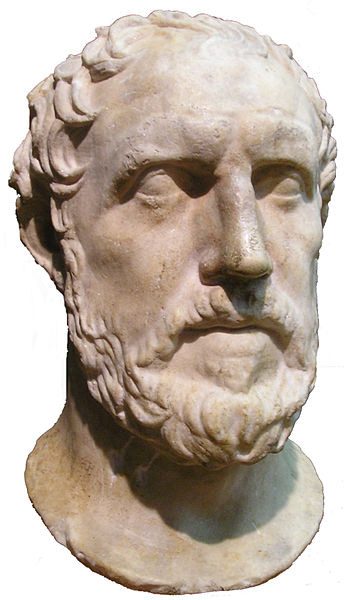
[99]Assembling in Doberus, they prepared for descending from the heights upon Lower Macedonia, where the dominions of Perdiccas lay; for the Lyncestae, Elimiots, and other tribes more inland, though Macedonians by blood and allies and, dependents of their kindred, still have their own separate governments. The country on the sea coast, now called Macedonia, was first acquired by Alexander, the father of Perdiccas, and his ancestors, originally Temenids from Argos. This was effected by the expulsion from Pieria of the Pierians, who afterwards inhabited Phagres and other places under Mount Pangaeus, beyond the Strymon (indeed the country between Pangaeus and the sea is still called the Pierian gulf) of the Bottiaeans, at present neighbors of the Chalcidians, from Bottia, and by the acquisition in Paeonia of a narrow strip along the river Axius extending to Pella and the sea; the district of Mygdonia, between the Axius and the Strymon, being also added by the expulsion of the Edonians. From Eordia also were driven the Eordians, most of whom perished, though a few of them still live round Physca, and the Almopians from Almopia. These Macedonians also conquered places belonging to the other tribes, which are still theirs--Anthemus, Crestonia, Bisaltia, and much of Macedonia proper. The whole is now called Macedonia, and at the time of the invasion of Sitalces, Perdiccas, Alexander's son, was the reigning king.
[100] These Macedonians, unable to take the field against so numerous an invader, shut themselves up in such strong places and fortresses as the country possessed. Of these there was no great number, most of those now found in the country having been erected subsequently by Archelaus, the son of Perdiccas, on his accession, who also cut straight roads, and otherwise put the kingdom on a better footing as regards horses, heavy infantry, and other war material than had been done by all the eight kings that preceded him. Advancing from Doberus, the Thracian host first invaded what had been once Philip's government, and took Idomene by assault, Gortynia, Atalanta, and some other places by negotiation, these last coming over for love of Philip's son, Amyntas, then with Sitalces. Laying siege to Europus, and failing to take it, he next advanced into the rest of Macedonia to the left of Pella and Cyrrhus, not proceeding beyond this into Bottia and Pieria, but staying to lay waste Mygdonia, Crestonia, and Anthemus. The Macedonians never even thought of meeting him with infantry; but the Thracian host was, as opportunity offered, attacked by handfuls of their horse, which had been reinforced from their allies in the interior. Armed with cuirasses, and excellent horsemen, wherever these charged they overthrew all before them, but ran considerable risk in entangling themselves in the masses of the enemy, and so finally desisted from these efforts, deciding that they were not strong enough to venture against numbers so superior.
[Thucydides, The Peloponnesian War,book 2]
“The Hellenic troops with him consisted of the Ambraciots, Leucadians, and Anactorians, and the thousand Peloponnesians with whom he came; the barbarian of a thousand Chaonians, who, belonging to a nation that has no king, were led by Photys and Nicanor, the two members of the royal family to whom the chieftainship for that year had been confided. With the Chaonians came also some Thesprotians, like them without a king, some Molossians and Atintanians led by Sabylinthus, the guardian of King Tharyps who was still a minor, and some Paravæans, under their king Oroedus, accompanied by a thousand Orestians, subjects of King Antichus and placed by him under the command of Oroedus. There were also a thousand Macedonians sent by Perdiccas without the knowledge of the Athenians, but they arrived too late. With this force Cnemus set out, without waiting for the fleet from Corinth. Passing through the territory of Amphilochian Argos, and sacking the open village of Limnæa, they advanced to Stratus the Acarnanian capital; this once taken, the rest of the country, they felt convinced, would speedily follow”
[Thucydides, The Peloponnesian War,book 2, Chapter VIII]
“In all there were about three thousand Hellenic heavy infantry, accompanied by all the Macedonian cavalry with the Chalcidians, near one thousand strong, besides an immense crowd of barbarians.”
[Thucydides, The Peloponnesian War,book 4, 124]
[Thucydides, The Peloponnesian War,book 4, 124]
Strabo
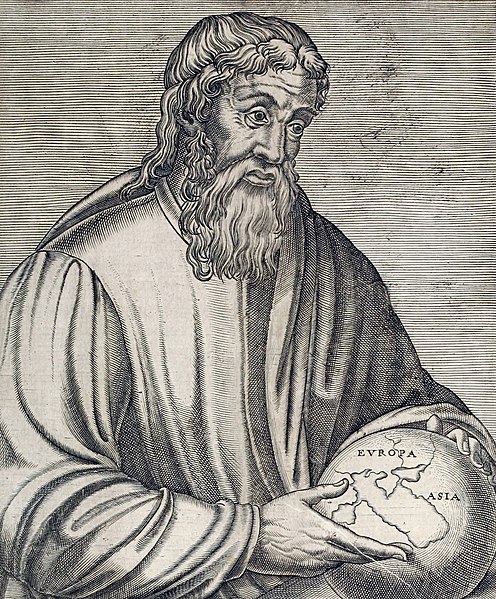
“There remain of Europe, first, Macedonia and the parts of Thrace that are contiguous to it and extend as far as Byzantium; secondly, Greece; and thirdly, the islands that are close by. Macedonia, of course, is a part of Greece, yet now, since I am following the nature and shape of the places geographically, I have decided to classify it apart from the rest of Greece and to join it with that part of Thrace which borders on it and extends as far as the mouth of the Euxine and the Propontis. Then, a little further on, Strabo mentions Cypsela and the Hebrus River, and also describes a sort of parallelogram in which the whole of Macedonia lies.”
[Strabo, Geography,book 7,Fragm,9]
“And even to the present day the Thracians, Illyrians, and Epeirotes live on the flanks of the Greeks (though this was still more the case formerly than now); indeed most of the country that at the present time is indisputably Greece is held by the barbarians — Macedonia and certain parts of Thessaly by the Thracians, and the parts above Acarnania and Aetolia by the Thesproti, the Cassopaei, the Amphilochi, the Molossi, and the Athamanes — Epeirotic tribes.”
[Strabo, Geography,book 7,VII,1]
“What is now called Macedonia was in earlier times called Emathia. And it took its present name from Macedon, one of its early chieftains. And there was also a city emathia close to the sea. Now a part of this country was taken and held by certain of the Epeirotes and the Illyrians, but most oii by the Bottiaei and the Thracians. The Bottiaei came from Crete originally, so it is said, along with Botton as chieftain. As for the Thracians, the Pieres inhabited Pieria and the region about Olympus; the Paeones, the region on both sides of the Axius River, which on that account is called Amphaxitis; the Edoni and Bisaltae, the rest of the country as far as the Strymon. Of these two peoples the latter are called Bisaltae alone, whereas a part of the Edoni are called Mygdones, a part Edones, and a part Sithones. But of all these tribes the Argeadae, as they are called, established themselves as masters, and also the Chalcidians of Euboea; for the Chalcidians of Euboea also came over to the country of the Sithones and jointly peopled about thirty cities in it, although later on the majority of them were ejected and came together into one city, Olynthus; and they were named the Thracian Chalcidians.”
[Strabo, Geography, book 7, Fragm 11]
“When the Euboeans were returning from Troy, some of them, after being driven out of their course to Illyria, set out for home through Macedonia, but remained in the neighborhood of Edessa, after aiding in war those who had received them hospitably; and they founded a city Euboe“
[Strabo, Geography,book 10,I,15]
“From its melody and rhythm and instruments, all Thracian music has been considered to be Asiatic. And this is clear, first, from the places where the Muses have been worshipped, for Pieria and Olympus and Pimpla and Leibethrum were in ancient times Thracian places and mountains, though they are now held by the Macedonians;”
[Strabo, Geography,book 10,III,17]
“….and again, of the Epeirotes, the Molossi became subject to Pyrrhus, the son of Neoptolemus the son of Achilles, and to his descendants, who were Thessalians. But the rest were ruled by men of native stock.”
[Strabo, Geography, book 7, VII, 8]
“It is said that Orestes once took possession of Orestias — when in exile on account of the murder of his mother — and left the country bearing his name; and that he also founded a city and called it Argos Oresticum.”
[Strabo, Geography,book 7,VII,8]
“After having described as much of the western parts of Europe as is comprised within the interior and exterior seas, and surveyed all the barbarous nations which it contains, as far as the Don and a small part of Greece, [namely, Macedonia,] we propose to give an account of the remainder of the Helladic geography. “
[Strabo, Geography, BOOK 8, 1]
“…but after they had intrusted to Lycurgus the formation of a political constitution, they acquired such a superiority over the other Greeks, that they alone obtained the sovereignty both by sea and land, and continued to be the chiefs of the Greeks, till the Thebans, and soon afterwards the Macedonians, deprived them of this ascendency“
[Strabo, Geography, BOOK 8, V]
“The veneration for this god prevailed so strongly among the Greeks, that the Macedonians, even when masters of the country, nevertheless preserved even to the present time the privilege of the asylum, and were restrained by shame from dragging away the suppliants who took refuge at Calauria
[Strabo, Geography, BOOK 8, 6]
“The Acarnanians, and the Ætolians, like many other nations, are at present worn out, and exhausted by continual wars. The Ætolians however, in conjunction with the Acarnanians, during a long period withstood the Macedonians and the other Greeks “
[Strabo, Geography, Book 10, Chapter 2, 23]
Egypt is now a Province; and it not only pays considerable tribute, but also is governed by prudent men81 — the praefects who are sent there from time to time. Now he who is sent has the rank of the king; and subordinate to him is the administrator of justice,82 who has supreme authority over most of the law-suits; and another is the official called Idiologus,83 who inquires into all properties that are without owners and that ought to fall to Caesar; and these are attended by freedmen of Caesar, as also by stewards, who are entrusted with affairs of more or less importance. There are also three legions of soldiers, one of which is stationed in the city and the others in the country; and apart from these there are nine Roman cohorts, three in the city, three on the borders of Aethiopia in Syenκ, as a guard for that region, and three in the rest of the country. And there are also three bodies of cavalry, which likewise are assigned to the various critical points. Of the native officials in the city, one is the Interpreter,84 who is clad in purple, has hereditary prerogatives, and has charge of the interests of the city; and another the Recorder;85 and another the Chief Judge;86 and the fourth the Night Commander.87 Now these officers existed also in the time of the kings, but, since the kings were carrying on a bad government, the prosperity of the cities was also vanishing on account of the prevailing lawlessness. At any rate, Polybius, who had visited the city, is disgusted with the state of p51things then existing; and he says that three classes inhabited the city: first, the Aegyptian or native stock of people, who were quick-tempered and not88 inclined to strife; and, secondly, the mercenary class, who were severe and numerous and intractable (for by an ancient custom they would maintain foreign men-at‑arms, who had been trained to rule rather than to be ruled, on account of the worthlessness of the kings); and, third, the tribe of the Alexandrians, who also were not distinctly inclined to civil life, and for the same reasons, but still they were better than those others,89 for even though they were a mixed people, still they were Greeks by ORIGIN and mindful of the customs common to the Greeks. But after this mass of people had also been blotted out, chiefly by Euergetes Physcon, in whose time Polybius went to Alexandria (for, being opposed by factions, Physcon more often sent the masses against the soldiers and thus caused their destruction) — such being the state of affairs in the city, Polybius says, in very truth there remained for one, in the words of the poet, merely “to go to Aegypt, a long and painful journey.”
[Strabo Book XVII, 12 ]
Subscribe to:
Posts (Atom)


